Half Sized Blog Element (Single Author Style)
Half Sized Blog Element (Multi Author Style)
Mahatma Gandhi on Satyagraha | MK Gandhi
/0 Comments/in Historical & Political Figures/by rathodkethan1@gmail.comAbout Mahatma Gandhi : who led revolution without weapons
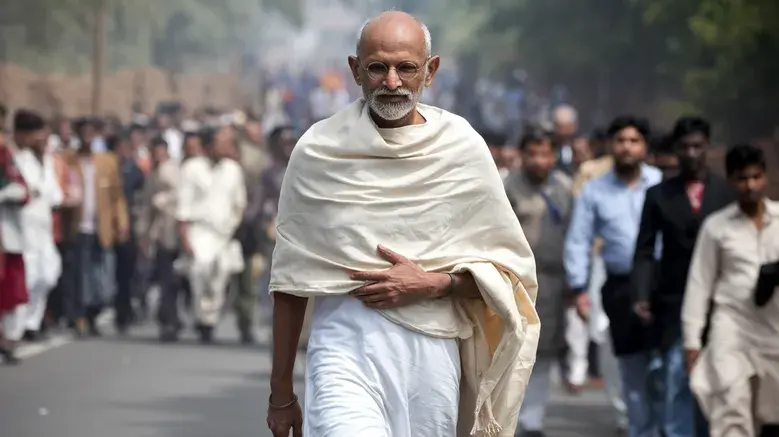
Satyagraha was not originally related to MK Gandhi. Even before him, the idea of Satyagraha is widely mentioned in religious texts like Upanishads, Ramayana, Mahabharata, Gita, Quran and many other books. The work of putting it into practice has been done from time to time by many Indians and Westerners like Prahlad, Raja Harishchandra, Sakurat, Plato, Jesus Christ, Emperor Ashoka. Prahlad was perhaps the first person to practice Satyagraha against the atrocities of his cruel father. At that time, it was not understood in the true sense of Satyagraha. According to MK Gandhi, “The principle of Satyagraha came into existence before its naming. In fact, when it was born I myself did not know what it was.”
Some Westerners believe that Gandhi derived the idea of Satyagraha from the New Testament of Jesus Christ, especially the Teachings on the Father. Some others believe that he derived the idea from the writings of Tolstoy, while Tolstoy himself derived it from the New Testament. In fact Gandhi’s idea of Satyagraha was inspired neither by Jesus Christ nor by Tolstoy, but the main basis of his inspiration was his own Vaishnavite faith in which he had unshakable faith.”
If observed carefully, Satyagraha appears to have originated from Indian traditions. Meaning and Origin of Satyagraha.
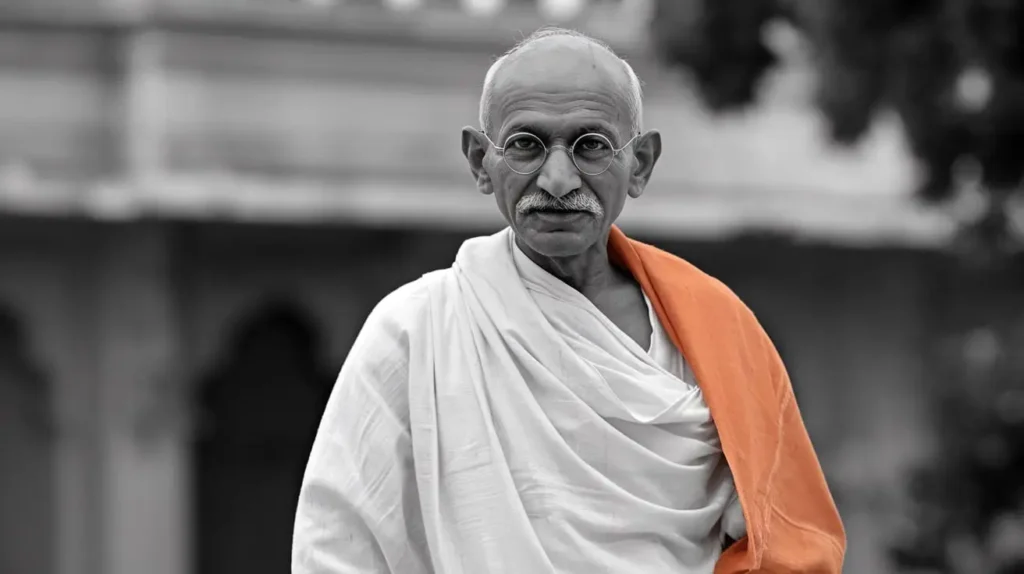
The word Satyagraha is basically a Sanskrit word. It is a combination of two words Satya and Agraha. Its literal meaning is insistence on truth. In other words, Satyagraha means sticking to truth and persevering in the attainment of truth.
Defining Satyagraha, Gandhi writes:
“Truth demands the insistence of love and thus this insistence becomes a synonym for strength. This is why I began to call the Indian movement Satyagraha instead of Passive Resistance, which means a force based on the strong pillars of truth, love and non-violence.”
Gandhi in ‘Indian Opinion’ outlined Satyagraha as firmness in a sacred cause. In Young India he points out that Satyagraha is only a new form of the ‘doctrine of self-suffering’ and in Hind Swaraj he declares that “self-sacrifice is infinitely more preferable than the sacrifice of others” and a self-sacrificer, i.e. a self-sufferer, does not by his actions injure others. Satyagraha, which was Gandhi’s supreme invention, discovery or creation, talks of a relentless, unceasing pursuit of truth where there is no room for violence, hatred, envy, conceit and malice. His concept means inaction, It was not meekness, helplessness or self-indulgence. In fact it refers to a way of thinking and a philosophy of life of the human mind which rests on a strong desire to achieve a noble goal, an unflinching faith in the principle of the victory of love over hatred, voluntary self-suffering for the transformation of hearts and the patient and active use of non-violent and just means to achieve these goals. In the words of the famous Gandhian Acharya J. B. Kripani, “Satyagraha demands something more than just attack. It refers to the continuous moral upliftment of the struggling masses. It also means moral defeat of opponents. A satyagraha is non-cooperative rather than a strike. Satyagraha in its truest sense is a continuous and active search for truth and non-violent struggle against untruth. Satyagraha also means the assertion of the power of the human soul against political and economic domination, which always rejects truth for
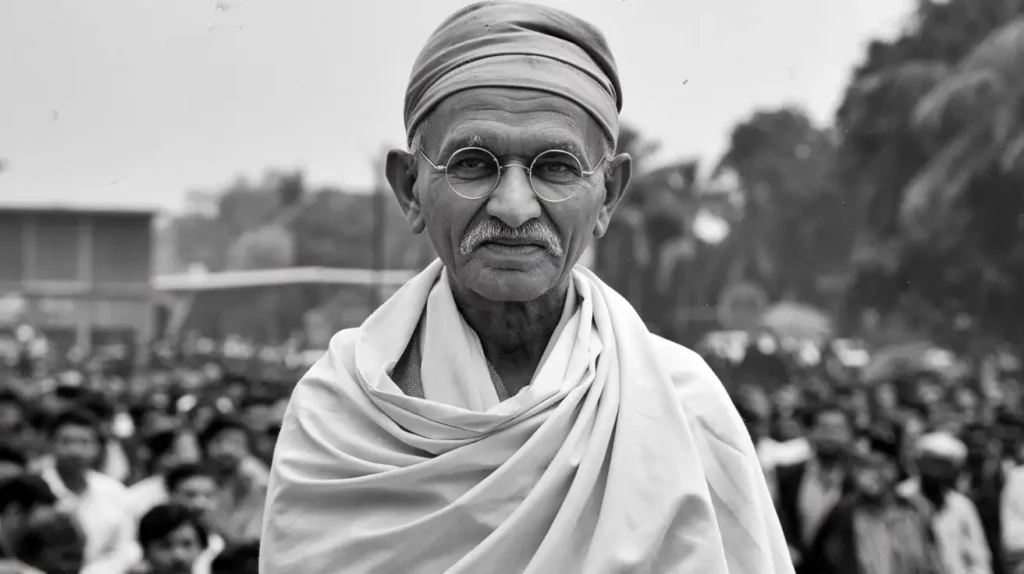
its false ends. So satyagraha is the highest expression of human consciousness. Consciousness motivates man strongly to non-violent struggle for the attainment of truth.
Satyagraha is the greatest expression of faith, trust, conscience, love and humility. It is a great victory in itself.Satyagraha is the relentless pursuit of truth and the attainment of it. It shows its tenacity, stability but sharpness.
In fact there is no force in the world as resilient, gentle and clear as it. It raises the self-force against injustice, injustice, oppression and exploitation. Literally it means. “The pressure of truth” which finds its expression in self-suffering, faith, determination, self-realization and self-confidence. The principle of Satyagraha is not a new discovery. It is as old as Patanjali. MK Gandhi made a strong effort to connect its origin with the idea of enmity. Calling Satyagraha Kamadhenu, Gandhi said that it is useful for both the Satyagraha and its opponents. Satyagraha has also been related to Vedic Ayugs. Between its original form of ‘human and animal sacrifice’ and its contemporary expression in Satyagraha, (it has gone through a period of sharp divergences in the intellectual rationalization of the Upanishads and the humanistic concerns of the Jains and the Buddhists.)
MK Gandhi discovered this unique weapon during his non-violent struggle against racial discrimination in South Africa. In 1906 Gandhi organised the Indian diaspora in South Africa and devised a novel method of resistance against unjust laws and public practices which Gandhi called ‘Passive Resistance’ but with the passage of time and the intensification of the struggle this name came under suspicion and doubt and it came to be regarded as a weapon of the weak. As a result, it would be considered shameful to use an English word that was not easily comprehensible.
He felt that the movement he had started had deeper implications than passive resistance. So, feeling the need to revive this new kind of resistance, Gandhi announced a small prize in his weekly paper Indian Opinion for suggesting a new and appropriate word. One of his colleagues, Magan Lal Gandhi suggested the word Sadagrah, which means unceasing effort to achieve a noble goal.
Gandhi liked it but also felt that it did not fully express his ideas as he saw it as a truth force whose expression was driven by the divine qualities of truth, love and non-violence. He therefore modified it slightly and named it ‘Satyagraha’ which literally means ‘insistence on truth’. While discussing the origins of Satyagraha with Joseph J. Bock, Gandhi expressed the following views. He said, ‘I remember how a line from a Gujarati poem I learnt in school attracted me immensely.’
It meant something like this: If someone satisfies your lust and in return you also satisfy his lust, there is nothing remarkable in it. The best thing is when you give goodness in return of badness. That line made a strong impression on me in my childhood and I tried my best to apply it in my behaviour. Then came the mention of the teachings on the Father. ‘But surely the Bhagavad Gita must have had the first influence on you?’ he replied, ‘No’. Although I am thoroughly familiar with the Bhagavad Gita in Sanskrit, I never made its teachings the reference for this particular work. In fact the New Testament explained to me the value and usefulness of passive resistance. When I read these lines in the ‘Precepts on the Lord’ – ‘Resist evil and not evil.’ If somebody slaps you on your right cheek, quickly put forward your left cheek also and love your enemy as your loved ones and pray for his well-being because he may be one of the sons of my Father living in heaven, then I will be filled with joy and happiness and I will know that this is the reason why God has given me so much happiness.
Nelson Nelson Mandela | President Mandela Autobiography
/1 Comment/in Historical & Political Figures/by rathodkethan1@gmail.comNelson Mandela : Lessons from his legacy

Nelson Mandelas Rules for Leadership :
Nelson Mandelas Rules for Leadership : The policy of apartheid was part of South Africa’s institutional racism. He was committed to finding peaceful solutions to his country’s social problems, and was ultimately awarded the Nobel Peace Prize for it. The whole world stood with him in Mandalay’s violent struggle for the right to freedom and justice for his people, and it was established that with good faith and international support it was certainly possible to defeat the oppressive forces. He shattered the remaining barriers by becoming the first black president of a democratic republic in South Africa. In this book, Yon McDonough and Malik have paid tribute to Nelson Mandela by portraying his life from boyhood to the cradle and beyond, in a moving tribute that introduces his “long freedom journey” to today’s generation. It is a journey that readers of all ages will enjoy taking with them.
Childhood : Nelson rolihlahla was born on 18 July 1918 in Mezego, South Africa. His father, the rolihlahla Mandelas family’s leader, was a great scholar and great leader of the Thembulan people. The Thembukbele people, whose ancestors had lived in Africa for many years, were black. But, although Africa was their country, they were dependent on the hearts of white immigrants. These white people, mainly from England and Germany, took over their land in the 1700s and began to dominate them. Once when an English judge ordered Muktkhay Hendri to appear before a judge in a case of a bull, he refused to go. According to him, the duty of a Thembu Muktkhay was to obey the orders of the Thembu officer and not any English officer. Due to his ignorance, Hendri had to resign from his Muktkhay post. Due to this he lost his land, his estate and his respectable position.
After this incident, the villagers started living in Kunuman, a nearby village where they lived with their relatives on a farm. Though Kunu was a very small place, Bumi liked it. Their house consisted of three small huts, the walls of which were made of clay bricks, and six were made of clay.
Although Hendery Mandel himself had never been to school, he was determined that his son should have that opportunity. When Budhi came home, he asked everyone to call him Nelson, a name given by the teacher that was his favourite. Since the school was managed by the English visitors, the students were taught that the British ways, which were superior to their religion, history, culture and world, were not taught to respect their own customs and culture. But Nelson still loved school. He was given new things to learn every day, and was given a
schedule and a schedule so he could write those things. In 1927, when Son Mandela was nine, his father died.
Nelson man was amazed to see its motorbike races, its elegant houses, its beautiful gardens, and its groves of fruit trees. Nelson started living with Sardar Joktaganini Badaldayebo, a relative of his father, who accepted him as his guardian. He quickly got used to his new life with little difficulty. Sardar’s children and Nelson went to school and the village together, and got along well. Nelson did well in school, but he later said that he did not lose his focus because of this, but he desperately wanted to succeed. Nelson also liked living in the big city because very important people, such as Sardar and Dalton, used to come to visit him and he had the opportunity to see them. From these people, Nelson learned a lot about the history of Africa and its great men. The things he heard from them stayed with him for a long time.
At the age of sixteen, Nelson had to enter the youth with his traditional customs. because the blacks of South Africa were living as slaves on their own land, and were deprived of their freedom and more tears.

His role in ending apartheid :
Adult life :Many years later Nelson wrote how deeply these words had made an impression on him at that young age. He said that at that time it was not possible for him to have any meaning in this field, but these words got embedded in his mind, and these tears formed his ideas about the world.
Nelson continued his education, first at the Kandy College, which was a teaching institution in the town of Tanzania, and also took time out for British missions to black people across Africa. In his final year at Forty-five he was elected to the student council.
But an unexpected change occurred when he moved to the big city in 1940 after a disagreement with the school principal. Although the British family was trying to make such centuries-old laws against the British, Nelson and Justice had other plans. Both of them fled from home and reached the small town of Johnston. Nelson’s dream was to become a lawyer. Along with joining the army of Siedlski, Nelson continued his studies.
As soon as Nelson Mandela’s name was heard by many, most white people were angry and afraid of him. They did not like Nelson’s actions at all. As long as the country was alive, black people were under his control, and everything in South Africa remained as before.

Arrested & Imprisoned :
Arrested & Improsioned : One day when Nelson was fast asleep, police entered his house, arrested him and took him to jail. Nelson went to jail many times for his anti-racism slogans and activities. But every time he got released. But finally in 1963 he was charged with organising vandalism, causing damage to temples and other government property, and violent demonstrations against the white government. These were very serious charges and if Nelson was found guilty, he could have been awarded the death penalty. Although Nelson and others were found guilty, they were not given the death penalty. Instead, he was given the punishment of life imprisonment.
Leadership lessons from Mandela : Even while in prison, Nelson Mandela continued to exert his influence on the country. The countless visitors who came to meet him were deeply impressed by his courage, determination and wisdom. They all started talking about him, and his name and struggle would be remembered not only in Africa but all over the world. Governments of many countries, political parties, national organizations, and the world began demanding his release. Many agreed to release him from prison only on their own terms. By now, the policy of apartheid had begun to be severely criticized at home and abroad. People in South Africa began protesting against it, and riots broke out there. Other countries imposed economic sanctions against South Africa, and banned the sale or purchase of any goods from there. The structure of apartheid was about to collapse. Finally, the South African government began to feel that they had no option other than to keep Nelson Mandela. The country’s then-president William D. Klerk urged President Nelson Mandela to resign in 1990.
Life History of Nelson Mandela :
18 July 1918 – Born in Mesoamerica
1919-1920 – Attendance at the provincial college
1927 – Arrival in Macau, “Mahan Nagar”
1934 – Participates in the ceremony othe Shore of the Nation
1938 – Enters the Fort Hare School of the Etah Municipality
1940 – Retires from Fort Hare
1941 – Arrives in Johor
1943 – Joins the African National Congress (ANC)
1944 – Participates in the founding of the war branch of the ANC; Ellen Mace is the son of the 19th century man who had three children
1953 – Joins forces with Otto Mbeki to form South Africa’s first black law office
1956 – Arrested along with 156 others on charges of treason
1957 – Acquaintance with Nelson Mandela for the murder of Ellen Mace
1958 – He is the son of the 19th century man who had two children
1960 – Punishment of the 19th century man who had two children
1963 – Charged with sedition and sabotage, sentenced to life imprisonment
1990 – Released from prison
1991 – Appointed President of the ANC and elected National President Appointment in
1993 – Nobel Peace Prize award along with President D. C. Clarke of South Africa
1994 – Nomination for the post of President of South Africa
1996 – Award of the Nobel Peace Prize to Tini and Nelson Mandela
1999 – Affiliation from British Columbia

Mahatma Gandhi on Satyagraha | MK Gandhi
/0 Comments/in Historical & Political Figures/by rathodkethan1@gmail.comAbout Mahatma Gandhi : who led revolution without weapons
Satyagraha was not originally related to MK Gandhi. Even before him, the idea of Satyagraha is widely mentioned in religious texts like Upanishads, Ramayana, Mahabharata, Gita, Quran and many other books. The work of putting it into practice has been done from time to time by many Indians and Westerners like Prahlad, Raja Harishchandra, Sakurat, Plato, Jesus Christ, Emperor Ashoka. Prahlad was perhaps the first person to practice Satyagraha against the atrocities of his cruel father. At that time, it was not understood in the true sense of Satyagraha. According to MK Gandhi, “The principle of Satyagraha came into existence before its naming. In fact, when it was born I myself did not know what it was.”
Some Westerners believe that Gandhi derived the idea of Satyagraha from the New Testament of Jesus Christ, especially the Teachings on the Father. Some others believe that he derived the idea from the writings of Tolstoy, while Tolstoy himself derived it from the New Testament. In fact Gandhi’s idea of Satyagraha was inspired neither by Jesus Christ nor by Tolstoy, but the main basis of his inspiration was his own Vaishnavite faith in which he had unshakable faith.”
If observed carefully, Satyagraha appears to have originated from Indian traditions. Meaning and Origin of Satyagraha.
The word Satyagraha is basically a Sanskrit word. It is a combination of two words Satya and Agraha. Its literal meaning is insistence on truth. In other words, Satyagraha means sticking to truth and persevering in the attainment of truth.
Defining Satyagraha, Gandhi writes:
“Truth demands the insistence of love and thus this insistence becomes a synonym for strength. This is why I began to call the Indian movement Satyagraha instead of Passive Resistance, which means a force based on the strong pillars of truth, love and non-violence.”
Gandhi in ‘Indian Opinion’ outlined Satyagraha as firmness in a sacred cause. In Young India he points out that Satyagraha is only a new form of the ‘doctrine of self-suffering’ and in Hind Swaraj he declares that “self-sacrifice is infinitely more preferable than the sacrifice of others” and a self-sacrificer, i.e. a self-sufferer, does not by his actions injure others. Satyagraha, which was Gandhi’s supreme invention, discovery or creation, talks of a relentless, unceasing pursuit of truth where there is no room for violence, hatred, envy, conceit and malice. His concept means inaction, It was not meekness, helplessness or self-indulgence. In fact it refers to a way of thinking and a philosophy of life of the human mind which rests on a strong desire to achieve a noble goal, an unflinching faith in the principle of the victory of love over hatred, voluntary self-suffering for the transformation of hearts and the patient and active use of non-violent and just means to achieve these goals. In the words of the famous Gandhian Acharya J. B. Kripani, “Satyagraha demands something more than just attack. It refers to the continuous moral upliftment of the struggling masses. It also means moral defeat of opponents. A satyagraha is non-cooperative rather than a strike. Satyagraha in its truest sense is a continuous and active search for truth and non-violent struggle against untruth. Satyagraha also means the assertion of the power of the human soul against political and economic domination, which always rejects truth for
its false ends. So satyagraha is the highest expression of human consciousness. Consciousness motivates man strongly to non-violent struggle for the attainment of truth.
Satyagraha is the greatest expression of faith, trust, conscience, love and humility. It is a great victory in itself.Satyagraha is the relentless pursuit of truth and the attainment of it. It shows its tenacity, stability but sharpness.
In fact there is no force in the world as resilient, gentle and clear as it. It raises the self-force against injustice, injustice, oppression and exploitation. Literally it means. “The pressure of truth” which finds its expression in self-suffering, faith, determination, self-realization and self-confidence. The principle of Satyagraha is not a new discovery. It is as old as Patanjali. MK Gandhi made a strong effort to connect its origin with the idea of enmity. Calling Satyagraha Kamadhenu, Gandhi said that it is useful for both the Satyagraha and its opponents. Satyagraha has also been related to Vedic Ayugs. Between its original form of ‘human and animal sacrifice’ and its contemporary expression in Satyagraha, (it has gone through a period of sharp divergences in the intellectual rationalization of the Upanishads and the humanistic concerns of the Jains and the Buddhists.)
MK Gandhi discovered this unique weapon during his non-violent struggle against racial discrimination in South Africa. In 1906 Gandhi organised the Indian diaspora in South Africa and devised a novel method of resistance against unjust laws and public practices which Gandhi called ‘Passive Resistance’ but with the passage of time and the intensification of the struggle this name came under suspicion and doubt and it came to be regarded as a weapon of the weak. As a result, it would be considered shameful to use an English word that was not easily comprehensible.
He felt that the movement he had started had deeper implications than passive resistance. So, feeling the need to revive this new kind of resistance, Gandhi announced a small prize in his weekly paper Indian Opinion for suggesting a new and appropriate word. One of his colleagues, Magan Lal Gandhi suggested the word Sadagrah, which means unceasing effort to achieve a noble goal.
Gandhi liked it but also felt that it did not fully express his ideas as he saw it as a truth force whose expression was driven by the divine qualities of truth, love and non-violence. He therefore modified it slightly and named it ‘Satyagraha’ which literally means ‘insistence on truth’. While discussing the origins of Satyagraha with Joseph J. Bock, Gandhi expressed the following views. He said, ‘I remember how a line from a Gujarati poem I learnt in school attracted me immensely.’
It meant something like this: If someone satisfies your lust and in return you also satisfy his lust, there is nothing remarkable in it. The best thing is when you give goodness in return of badness. That line made a strong impression on me in my childhood and I tried my best to apply it in my behaviour. Then came the mention of the teachings on the Father. ‘But surely the Bhagavad Gita must have had the first influence on you?’ he replied, ‘No’. Although I am thoroughly familiar with the Bhagavad Gita in Sanskrit, I never made its teachings the reference for this particular work. In fact the New Testament explained to me the value and usefulness of passive resistance. When I read these lines in the ‘Precepts on the Lord’ – ‘Resist evil and not evil.’ If somebody slaps you on your right cheek, quickly put forward your left cheek also and love your enemy as your loved ones and pray for his well-being because he may be one of the sons of my Father living in heaven, then I will be filled with joy and happiness and I will know that this is the reason why God has given me so much happiness.
Nelson Nelson Mandela | President Mandela Autobiography
/1 Comment/in Historical & Political Figures/by rathodkethan1@gmail.comNelson Mandela : Lessons from his legacy
Nelson Mandelas Rules for Leadership :
Nelson Mandelas Rules for Leadership : The policy of apartheid was part of South Africa’s institutional racism. He was committed to finding peaceful solutions to his country’s social problems, and was ultimately awarded the Nobel Peace Prize for it. The whole world stood with him in Mandalay’s violent struggle for the right to freedom and justice for his people, and it was established that with good faith and international support it was certainly possible to defeat the oppressive forces. He shattered the remaining barriers by becoming the first black president of a democratic republic in South Africa. In this book, Yon McDonough and Malik have paid tribute to Nelson Mandela by portraying his life from boyhood to the cradle and beyond, in a moving tribute that introduces his “long freedom journey” to today’s generation. It is a journey that readers of all ages will enjoy taking with them.
Childhood : Nelson rolihlahla was born on 18 July 1918 in Mezego, South Africa. His father, the rolihlahla Mandelas family’s leader, was a great scholar and great leader of the Thembulan people. The Thembukbele people, whose ancestors had lived in Africa for many years, were black. But, although Africa was their country, they were dependent on the hearts of white immigrants. These white people, mainly from England and Germany, took over their land in the 1700s and began to dominate them. Once when an English judge ordered Muktkhay Hendri to appear before a judge in a case of a bull, he refused to go. According to him, the duty of a Thembu Muktkhay was to obey the orders of the Thembu officer and not any English officer. Due to his ignorance, Hendri had to resign from his Muktkhay post. Due to this he lost his land, his estate and his respectable position.
After this incident, the villagers started living in Kunuman, a nearby village where they lived with their relatives on a farm. Though Kunu was a very small place, Bumi liked it. Their house consisted of three small huts, the walls of which were made of clay bricks, and six were made of clay.
Although Hendery Mandel himself had never been to school, he was determined that his son should have that opportunity. When Budhi came home, he asked everyone to call him Nelson, a name given by the teacher that was his favourite. Since the school was managed by the English visitors, the students were taught that the British ways, which were superior to their religion, history, culture and world, were not taught to respect their own customs and culture. But Nelson still loved school. He was given new things to learn every day, and was given a
schedule and a schedule so he could write those things. In 1927, when Son Mandela was nine, his father died.
Nelson man was amazed to see its motorbike races, its elegant houses, its beautiful gardens, and its groves of fruit trees. Nelson started living with Sardar Joktaganini Badaldayebo, a relative of his father, who accepted him as his guardian. He quickly got used to his new life with little difficulty. Sardar’s children and Nelson went to school and the village together, and got along well. Nelson did well in school, but he later said that he did not lose his focus because of this, but he desperately wanted to succeed. Nelson also liked living in the big city because very important people, such as Sardar and Dalton, used to come to visit him and he had the opportunity to see them. From these people, Nelson learned a lot about the history of Africa and its great men. The things he heard from them stayed with him for a long time.
At the age of sixteen, Nelson had to enter the youth with his traditional customs. because the blacks of South Africa were living as slaves on their own land, and were deprived of their freedom and more tears.
His role in ending apartheid :
Adult life :Many years later Nelson wrote how deeply these words had made an impression on him at that young age. He said that at that time it was not possible for him to have any meaning in this field, but these words got embedded in his mind, and these tears formed his ideas about the world.
Nelson continued his education, first at the Kandy College, which was a teaching institution in the town of Tanzania, and also took time out for British missions to black people across Africa. In his final year at Forty-five he was elected to the student council.
But an unexpected change occurred when he moved to the big city in 1940 after a disagreement with the school principal. Although the British family was trying to make such centuries-old laws against the British, Nelson and Justice had other plans. Both of them fled from home and reached the small town of Johnston. Nelson’s dream was to become a lawyer. Along with joining the army of Siedlski, Nelson continued his studies.
As soon as Nelson Mandela’s name was heard by many, most white people were angry and afraid of him. They did not like Nelson’s actions at all. As long as the country was alive, black people were under his control, and everything in South Africa remained as before.
Arrested & Imprisoned :
Arrested & Improsioned : One day when Nelson was fast asleep, police entered his house, arrested him and took him to jail. Nelson went to jail many times for his anti-racism slogans and activities. But every time he got released. But finally in 1963 he was charged with organising vandalism, causing damage to temples and other government property, and violent demonstrations against the white government. These were very serious charges and if Nelson was found guilty, he could have been awarded the death penalty. Although Nelson and others were found guilty, they were not given the death penalty. Instead, he was given the punishment of life imprisonment.
Leadership lessons from Mandela : Even while in prison, Nelson Mandela continued to exert his influence on the country. The countless visitors who came to meet him were deeply impressed by his courage, determination and wisdom. They all started talking about him, and his name and struggle would be remembered not only in Africa but all over the world. Governments of many countries, political parties, national organizations, and the world began demanding his release. Many agreed to release him from prison only on their own terms. By now, the policy of apartheid had begun to be severely criticized at home and abroad. People in South Africa began protesting against it, and riots broke out there. Other countries imposed economic sanctions against South Africa, and banned the sale or purchase of any goods from there. The structure of apartheid was about to collapse. Finally, the South African government began to feel that they had no option other than to keep Nelson Mandela. The country’s then-president William D. Klerk urged President Nelson Mandela to resign in 1990.
Life History of Nelson Mandela :
18 July 1918 – Born in Mesoamerica
1919-1920 – Attendance at the provincial college
1927 – Arrival in Macau, “Mahan Nagar”
1934 – Participates in the ceremony othe Shore of the Nation
1938 – Enters the Fort Hare School of the Etah Municipality
1940 – Retires from Fort Hare
1941 – Arrives in Johor
1943 – Joins the African National Congress (ANC)
1944 – Participates in the founding of the war branch of the ANC; Ellen Mace is the son of the 19th century man who had three children
1953 – Joins forces with Otto Mbeki to form South Africa’s first black law office
1956 – Arrested along with 156 others on charges of treason
1957 – Acquaintance with Nelson Mandela for the murder of Ellen Mace
1958 – He is the son of the 19th century man who had two children
1960 – Punishment of the 19th century man who had two children
1963 – Charged with sedition and sabotage, sentenced to life imprisonment
1990 – Released from prison
1991 – Appointed President of the ANC and elected National President Appointment in
1993 – Nobel Peace Prize award along with President D. C. Clarke of South Africa
1994 – Nomination for the post of President of South Africa
1996 – Award of the Nobel Peace Prize to Tini and Nelson Mandela
1999 – Affiliation from British Columbia