1.Kings & Queens
2.Freedom Fighters
3.Presidents & Prime Ministers
4.Revolutionaries & Reformers

Justin Trudeau: Navigating Modern Leadership

Justin Trudeau: A Modern Leader

Justin Trudeau

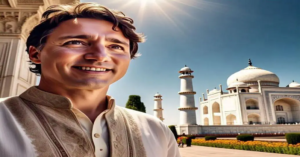
In a time of political turmoil, economic unpredictability and a climate crisis that could define our future. Then modern leader must wear more hats than ever. Here they have diplomats, visionaries, crisis managers and, more and more, social influencers. One of the foreign leaders fumbling through this volatile political landscape is Justin Trudeau, the Canadian 23rd Prime Minister. The son of Canada’s most famous former prime minister, Pierre Elliott Trudeau, Justin possessed both a potent heritage and a burdened political glare. But is he a latter-day progressive avatar. So he is  a flag-bearer for the 21st-century left, or rather a talisman of liberalism’s long rout?

Let’s walk through Trudeau’s path through the maze of modern leadership. From high-minded promises and populist branding to missteps and geopolitical chess games — and back again.

The Rise of Justin Trudeau

Justin Trudeau The Political Inheritance

For Justin Trudeau, a career in politics was anything but an accident. It was no small responsibility for Tucker, born December 25, 1971. Here is his family synonymous with Canadian politics.

Justin Trudeau Sr.’s Legacy

Pierre Trudeau changed the face of Canadian society through his commitment to bilingualism, multiculturalism, and a strong federal government. His 15 years in office helped shape the country’s identity, and Justin’s ascent to power reanimated memories of his father’s charisma — right down to the rolled-up sleeves and rhetorical flourishes.

Justin Trudeau: Drama Teacher to Parliament

Trudeau was a schoolteacher prior to entering politics, serving as a teacher at the secondary level. That less than conventional path taught him emotional intelligence, public speaking skills, both of which were the identity of his leadership later.

Justin Trudeau: A Symbol of Hope

Trudeau inherited a shambles of a party when he became leader in 2013. His youth, his inclusivity-centered message and social media prowess resurrected its fortunes, securing a lopsided majority victory in 2015.

Justin Trudeau Doctrine: Progressive Leadership in Action

Justin Trudeau

Domestic Policies that Defined a Generation

Leadership by Trudeau has been synonymous with progressive values. But converting vision into policy is always harder.

Justin Trudeau: Feminism and Cabinet Equality

When he appointed his cabinet in 2015, Trudeau chose an equal number of men and women. He was famously asked why and replied, “Because it’s 2015. This act was a world benchmark for gender equality in governance.

Justin Trudeau: Indigenous Reconciliation

Trudeau’s most ambitious and divisive domestic policy has been his promise to construct a new relationship with Indigenous peoples. The state has spent on clean water infrastructure and education, but critics say the inequities continue, and promises have gone unmet.

Justin Trudeau: Cannabis Legalization

In 2018, Canada became the second nation to legalize recreational marijuana — a key promise of Trudeau’s campaign. It is widely considered a progressive triumph, but challenges around its implementation — particularly distribution and enforcement — hang over the victory.

Justin Trudeau: Foreign Affairs Balancing Act

Navigating a Shifting Global Order

Trudeau’s foreign policy has had to adjust to vast global shifts: Trumpian protectionism, an increasingly assertive China and a resurgent Russia.

The US-Canada Relationship

Trudeau had a roller-coaster relationship with Donald Trump that included trade tensions and personal insults. Under President Biden relations had thawed, particularly regarding climate cooperation and shared economic recovery.

Justin Trudeau Confronting China

The extradition case involving Huawei executive Meng Wanzhou and Canadian citizens Michael Spavor and Michael Kovrig put Trudeau in an awkward diplomatic position. The standoff laid bare Canada’s vulnerability in the global power balance and the bind it finds itself in as it tries to balance values with realpolitik.

Standing for Ukraine

In the wake of Russia’s invasion of Ukraine, Trudeau has become a vocal opponent of Vladimir Putin, loudly touting his support for Ukraine’s sovereignty, offering aid and weaponry and instituting sanctions against Russian oligarchs.

Justin Trudeau: Controversies and Criticism

Scandals That Shook the Nation

Although Trudeau has cultivated an image of idealism and moral clarity, he has not governed scandal-free.

The SNC-Lavalin Affair

Last year, Trudeau was accused of trying to influence his Attorney General to intervene in the case against a Quebec engineering company and stop a criminal trial. The scandal tarnished his public image as a high moral arbiter and set off a national debate over whether officials were attempting to meddle with judicial procedures.

Justin Trudeau Blackface Incidents

More than one picture and video of a young Trudeau was published in blackface over the course of the 2019 campaign. He apologized, but the details of what was in the emails clashed with his professed diversity advocacy and cast doubts on how sincere his progressivism was.

Ethics Violations

Trudeau has been twice found guilty of breaking ethical rules, most notoriously in the WE Charity scandal, a controversy that raised conflict-of-interest questions over a massive student grant program that struggled with a separate scandal over mismanagement.

Trudeau and the Climate Crisis

Ambition vs. Action

Trudeau has some of the strongest climate change rhetoric of any G7 leader — but does this translate into action?

Carbon Pricing and Environmental Reform

Canada went on to become one of the only countries to enact a national carbon tax. The policy has been lauded around the world, but it also faced legal challenges and domestic anger, especially in provinces that rely on fossil fuels.

Pipeline Politics

Trudeau’s decision to approve and purchase the Trans Mountain Pipeline expansion angered many environmentalists, who saw it as a betrayal of climate commitments. Trudeau defends the decision as a way to fund green transitions while maintaining economic stability.

Net-Zero Goals

Some see Trudeau’s approval and decision to purchase the Trans Mountain Pipeline expansion as a betrayal of climate commitments that belied the threat of rampant fossil fuel use. Trudeau has defended the decision as a means to help finance green transitions while stabilizing economies.

The Trudeau Brand: Optics in the Digital Age

A Masterclass in Personal Branding

Justin Trudeau is often referred to as a leader in and of the digital age.

Social Media Savvy

Trudeau’s use of platforms like Instagram and Twitter is not just a form of communication — it’s also brand-building. From indigenous garb photo shoots to those PR-perfect family shots, his online persona is carefully groomed.

Celebrity Diplomacy

Trudeau is also no stranger to the ranks of Hollywood elites nor to international celebrity, a political personality mashed up with influencer. While it increases visibility, some critics say it tends to eclipse substance.

Style Over Substance?

The focus on optics has meant that Trudeau has often been accused of governing more for show than substance — a sort of liberal populism that prioritises image over results.


Challenges Ahead: Trudeau’s Third Term

A Polarized Political Landscape

Given the divisive nature of political discussion and the central role of election coverage in news organizations, it is plausible that partisanship or political polarization broadly construed is a predisposing factor for news avoidance.

While reelected in 2021 Trudeau lost the majority. The minority government highlights the growing polarization, with the surge of popular backing for both far-left NDP and far-right populist outfits like the People’s Party of Canada.

Economic Headwinds

With inflation, housing crises, and wealth disparity on the minds of Canadians, Trudeau’s track record on the economy will be scrutinized. Fiscal expenditures in response to Covid-19 had stimulated recovery while also added to debt worries.

Trust Deficit

Years of broken promises and cascading scandals have diminished Trudeau’s once-ebullient political capital. For him, the hardest work of his career may be replenishing trust.

 Will He Run Again?

As murmurs about Liberal leadership change become more audible, the question of whether Trudeau will go another round at the polls, and play a handing-off game with the leadership, is being asked.

Conclusion: Redefining Leadership in the 21st Century

The years of Justin Trudeau’s leadership have been a reflection of contradictions: idealism and pragmatism, charisma and controversy, ambition and compromise. His leadership style is the essence of the modern governance dilemma — where identity, values and global power relations intersect in unprecedented ways.

Whether history judges him as a transformational figure or as the symbol of an era of political stasis will come down to more than his choices but what Canadians do with their own national story in a rapidly changing world.

Fyodor Dostoevsky: The Master of Human Psychology

The Hidden Psychology in Fyodor Dostoevsky Novels: What Most Readers Miss

Fyodor Dostoevsky

Nietzsche once declared Fyodor Dostoevsky the only psychologist he had anything to learn from, thanks to his psychologically profound novels. A closer look at Crime and Punishment or The Brothers Karamazov reveals more than just fiction. These works offer a masterclass in human psychology that predicted concepts which would only be formalized decades later.

Fyodor Mikhailovich Dostoevsky’s exploration of psychological repression became the foundation for psychoanalysis. Freud’s praise was telling – he called The Brothers Karamazov “the most masterly novel ever written.”His broader work serves as a big experimental canvas where he continuously explores the problem of selfhood.

Let me take you through the hidden psychological dimensions that make Dostoevsky’s novels revolutionary psychological studies. These works are not just literary masterpieces – they continue to appeal to our understanding of the human mind today.

The Psychological Depth of Fyodor Dostoevsky Characters

Exploring deeply into a Dostoevsky novel brings you face to face with characters who surpass typical literary boundaries. His creations breathe, suffer, and contradict themselves with stunning psychological authenticity, unlike the flat personalities in most 19th-century fiction. These qualities are the foundations of his lasting literary legacy.

Why his characters feel real and complex

Dostoevsky’s characters come alive in remarkable ways. They embody psychological contradictions that mirror our own inner battles. His main characters hold conflicting desires, thoughts, and motivations at the same time—just like real people do. Take Prince Myshkin from The Idiot. His compassionate nature clashes with his social awkwardness, which makes him feel genuine despite his extreme qualities.

The author broke new ground by using inner monolog to show his characters’ psychological states. He doesn’t just describe what they do—he takes readers deep into their turbulent minds. This creates a unique closeness between reader and character. We don’t just watch Raskolnikov pace his cramped room in Crime and Punishment—we feel his anxiety right there with him.

Dostoevsky’s characters grow through psychological crisis, not convenient plot twists. Their changes come from deep internal battles. Dmitri Karamazov’s path from pleasure-seeking to spiritual awakening happens through psychological torment rather than outside events. This makes their development feel natural rather than forced by the story.

The author also refused to put characters in simple moral boxes. They aren’t heroes or villains but complex people capable of both greatness and darkness—often at the same time. All but one of his most despicable characters show some good qualities, while his most virtuous ones fight dark urges. This moral complexity shows the author’s grasp of human nature’s resistance to easy labels.

Psychological trauma runs deep in Dostoevsky’s characters, giving them unusual depth for his time. Stavrogin’s confession in Demons reveals childhood wounds behind his adult actions. Sonia in Crime and Punishment shows inner strength despite deep suffering. This focus on why things happen makes their actions believable, no matter how extreme.

How he predicted modern psychological theory

The author expressed psychological concepts decades before they became formal theories. His natural understanding of human psychology pointed the way for multiple schools of psychological thought.

Dostoevsky saw Freudian psychoanalysis coming through his exploration of hidden motives and psychological repression. The Underground Man’s self-destructive behavior, despite knowing better, shows what Freud later said about unconscious drives. On top of that, he understood dreams’ psychological importance long before Freud’s The Interpretation of Dreams. Raskolnikov’s nightmares reveal mental states he pushes down, opening windows into his unconscious mind.

His work laid the groundwork for existential psychology. Cognitive dissonance theory appears throughout his novels. Raskolnikov breaks down in part because his intellectual reasons for murder clash with his moral instincts. Leon Festinger didn’t formally identify this psychological mechanism until the 1950s.

These insights stand out because they came from watching and understanding people, not scientific study. He lived inside his characters so completely that their psychological reality jumps off the page. Modern readers find not just gripping stories but psychological truths that feel surprisingly current.

Dostoevsky’s psychological depth comes from his belief that humans are incredibly complex. Instead of simplifying this complexity to make the story easier, he embraced it. He created characters whose psychological truth continues to appeal across centuries and cultures.

Crime and Punishment: Fyodor Dostoevsky

Fyodor Dostoevsky

Dostoevsky shows us how intellectual pride, mental anguish, and spiritual rebirth connect through this troubled character.

Fyodor Dostoevsky theory of extraordinary men

Raskolnikov’s psychology centers on his controversial theory that splits humanity into two groups: ordinary and extraordinary people. His framework states that “ordinary people have to live in submission and have no right to transgress the law, because they are ordinary.” The extraordinary ones, however, “have the right to commit any crime and to transgress the law in any way, just because they are extraordinary.”

Raskolnikov believes exceptional individuals like Napoleon have an “inner right” to cross moral lines if it serves a greater purpose. These remarkable people might do terrible things, yet their actions become justified because they move civilization forward. They “sanction bloodshed in the name of conscience.”

This theory reflects how desperately Raskolnikov needs to feel important. He dropped out of university and fell into poverty. These failures led him to seek validation through his philosophical ideas. He tests if he belongs among the extraordinary to lift himself above his miserable life.

Raskolnikov kills the pawnbroker Alyona Ivanovna not just for money but to find out “whether I was a louse like everybody else or a man. Whether I can step over barriers or not.” He turns himself into both the researcher and subject of his philosophical experiment.

The psychological toll of guilt

His intellectual justifications fall apart under the pressure of reality. The murder doesn’t prove he’s extraordinary. Instead, it triggers overwhelming guilt that shows up in his body and mind. He suffers from feverish delirium, paranoia, and cuts himself off from others—his body rebels against his mind’s attempts to rationalize.

His mental breakdown reveals the flaw in his theory. A truly extraordinary person wouldn’t feel troubled by their actions. Yet his conscience torments him constantly. One critic points out that “he falls a victim of what he has been struggling to distance himself from; his own emotions.”

The novel’s central psychological drama plays out in Raskolnikov’s swings between pride and self-hatred. He tries to justify the murder with logic—saying he “simply killed for myself alone”—but his mental state tells us something else. His guilt makes him tell his family to “forget me altogether,” but this isolation only makes his suffering worse.

Raskolnikov’s struggle between intellectual reasoning and raw guilt shows Dostoevsky’s deep understanding: human psychology can’t be simplified into abstract theories. Our moral nature comes through no matter how we try to justify our actions.

Fyodor Dostoevsky Redemption through suffering

Dostoevsky ended up showing that suffering isn’t punishment but a way to redemption. Raskolnikov confesses because his conscience becomes unbearable and Sonya guides him spiritually. His time in Siberia becomes more than just punishment—it cleanses his soul.

His prison time changes him completely. Physical confinement sets his spirit free as he finally lets go of his pride and accepts his human weaknesses. Sonya becomes his “redemptive savior/angel” and shows him selflessness and faith despite her own hardships. She helps him see how he could start fresh spiritually.

Dostoevsky suggests that real punishment happens inside us—through “the extreme undesired mental and emotional torment and psychological suffering.” Raskolnikov can only start his journey toward redemption by fully feeling this pain. The novel’s epilog hints this process isn’t complete but looks promising—”the beginning of a new story, the story of a man’s gradual renewal and rebirth.”

This change shows a key truth in Dostoevsky’s view of life: people find redemption not by avoiding pain but by embracing it fully. Raskolnikov’s experience from proud intellectual to humble acceptance shows us how redemption exceeds religious rules while keeping spiritual meaning.

Fyodor Dostoevsky: The Birth of Existential Psychology

Notes from Underground stands out as Fyodor Mikhailovich Dostoevsky’s most groundbreaking psychological work. The 1864 novella gives us a narrator whose troubled mind paints a surprisingly modern picture of existential anxiety. This came decades before existentialism became a formal philosophical movement.

Fyodor Dostoevsky The Underground contradictions

The Underground Man lives in a world full of clashing contradictions. He calls himself “sick” and “spiteful,” yet refuses to see a doctor just “out of spite.” This self-destructive behavior shows up throughout the story. He’s a mix of opposites:

  • Smart enough to understand everything but can’t take meaningful action
  • Yearns for human connection but pushes everyone away
  • Knows right from wrong but can’t act on it
  • Looks down on society but desperately wants its approval

“I swear to you, gentlemen, that to be overly conscious is a sickness, a real, thorough sickness,” says the Underground Man. Through this character, Dostoevsky shows us how human psychology doesn’t follow neat, rational rules. The character’s irrational nature challenges the utilitarian and rationalist ideas of Dostoevsky’s time. His contradictions make us question whether we can reduce humans to simple logical formulas.

Fyodor Dostoevsky Self-awareness as a trap

While Romantic writers thought self-knowledge brought enlightenment, Dostoevsky shows us how too much self-awareness can become a prison. The Underground Man’s extreme self-consciousness leaves him paralyzed. One scholar describes this as “a kind of mental claustrophobia—a crushing sense of being imprisoned in one’s own psyche.”

The Underground Man can’t act because he thinks too much. “Every impulse is questioned until it disappears. Every feeling is inspected until it becomes inert.” This shows how excessive self-reflection works like an autoimmune disorder where “the mind turns on itself.”

This description mirrors what we now know as rumination and overthinking. The Underground Man gets stuck in an endless cycle of doubt and analysis. He can’t bridge the gap between thinking and doing. His inability to act comes from what we might call “philosophical overload”—something anyone who’s faced analysis paralysis would understand.

Fyodor Dostoevsky The fear of mediocrity

Behind all his philosophical talk, the Underground Man deeply fears being ordinary. He’s frustrated that he “never even managed to become anything: neither wicked nor good, neither a scoundrel nor an honest man, neither a hero nor an insect.” His escape to the underground shows his rebellion against being average—the scary thought of being just another face in the crowd.

“The abyss between his flawed self-conception and the inconvenience of reality is filled with a despairing envy and hatred of those he encounters.” This reveals how his fear of being ordinary turns into hatred for people who seem to handle life better. His anxiety about being mediocre strikes a chord with today’s concerns about significance and validation.

This fear pushes him toward theoretical extremes instead of practical action. He’d rather hold onto a “perfect conception of himself” than deal with life’s messy reality. He won’t “expose himself to experience” and ends up “festering like an unplanted seed, his potential growth extinguished.”

Dostoevsky saw something that existential psychologists would later call “existential anxiety”—the stress of facing life’s meaninglessness and creating our own purpose. Through the Underground Man, he suggests that accepting our ordinary human nature, with all its limits and contradictions, lets us live authentically.

Notes from Underground isn’t just a literary masterpiece—it’s the first real story about existential psychology. It shows us how our own minds can become our prison, and how being afraid of mediocrity can stop us from truly living.

Fyodor Dostoevsky: The Double and the Anxiety

“The Double” ranks among Fyodor Mikhailovich Dostoevsky’s most psychologically insightful works. It takes a closer look at identity fragmentation well before modern psychology had words to describe such phenomena. This novella follows government clerk Yakov Petrovich Golyadkin and his mysterious doppelgänger through psychological territory that resonates with today’s readers.

The doppelgänger as a fractured self

Identity emerges as unstable and prone to fracture in “The Double.” The story’s protagonist Golyadkin meets an exact physical copy of himself who systematically undermines his already shaky social position. This double serves as more than just a supernatural oddity—it embodies “the immoral manners of a man” and “reflects the complex divisions or contradictions within an individual’s personality”.

Dostoevsky brilliantly uses the doppelgänger to symbolize psychological splitting. The double exists not just as an external threat but reveals Golyadkin’s hidden character traits. The double (Golyadkin Junior) becomes everything Golyadkin Senior isn’t—”more confident, charming, and sociable”. Such contrast shows how the protagonist has buried certain aspects of his personality that return in external form.

A psychological perspective reveals the doppelgänger as “a split or breakdown of the ego within the protagonist himself”. The novella’s doctor diagnoses Golyadkin with “an introverted personality and paranoia”. Dostoevsky’s understanding of what we now call psychological dissociation came decades before formal psychological theory.

The doppelgänger theme connects to “a person’s ability—or lack thereof—to truly know who they are”. The double becomes a character that “forces the protagonist to deal with the uncomfortable realities of their identity”. Such psychological confrontation creates deep anxiety, as the double’s existence “raises uncomfortable questions for the protagonist regarding their identity and sense of self-worth”.

Modern parallels in online identity

Dostoevsky’s exploration of fragmented identity mirrors our digital age perfectly. Like Golyadkin’s double represented his unintegrated aspects, our carefully crafted online personas often show idealized versions that exist apart from our daily lives.

Social media profiles act like modern doppelgängers—curated self-images that often stray substantially from our authentic selves. One source points out that “that carefully curated online persona? That’s our modern-day double”. These psychological dynamics match Golyadkin’s experience: “The anxiety, the constant comparison, the fear of being ‘found out’ as less than perfect” echo his torment when faced with his more socially skilled double.

Digital identity involves the same “splintering of the soul that is caused by any rigid society”. The need to show an ideal image while hiding less appealing parts of our personality creates the exact kind of fractured identity Dostoevsky explored through his doppelgänger theme.

“The Double” teaches us a profound psychological lesson: pushing away parts of our personality doesn’t make them vanish—they might return in twisted, destructive ways. Keep in mind that genuine psychological health needs integration rather than denial—a lesson that applies to both Golyadkin’s split psyche and our divided digital selves.

Fyodor Dostoevsky The Brothers Karamazov: Family and Inner Conflict

The Brothers Karamazov stands as Fyodor Mikhailovich Dostoevsky’s greatest work. The novel creates a psychological battleground where faith and reason collide within a broken family. His final masterpiece shows the peak of his psychological understanding and reveals how family relationships shape our deepest life struggles.

Ivan’s intellectual despair

Ivan Karamazov shows us the pain of a thinker who can’t resolve the conflict between logic and faith. His clear and powerful arguments against religious belief make him one of literature’s most compelling atheist voices. He rebels against God because he can’t accept how innocent children suffer while believing in a loving deity.

The heart of Ivan’s inner conflict lies in his famous words “if God does not exist, everything is permitted” – a belief that leads to his downfall. His mind rejects morality, yet his conscience haunts him. His father’s murder pushes him toward madness as he grapples with guilt. Though he didn’t kill his father, his ideas might have given permission for the crime.

Alyosha’s spiritual experience

Alyosha shows us a different path – his faith endures despite challenges. He shines as “the beacon of Christian faith” with a pure heart and generous spirit that makes him the novel’s true hero. His faith isn’t blind but strengthened through doubt and pain – it remains “incarnational, lived, embodied, tender, and humble.”

Elder Zosima guides Alyosha’s spiritual growth. The elder’s teaching of “radical love” shows that “the suffering of one is the responsibility of all.” These lessons lead Alyosha into the world not to avoid pain but to heal it through compassion. Later, he responds to Ivan’s intellectual challenges with a kiss, showing how compassion exceeds rational debate.

Fyodor Dostoevsky The father-son dynamic

Fyodor Pavlovich’s complete failure as a father creates the psychological foundation of the story. Dostoevsky believes “the family is the source of moral guidance.” Without this guidance, people become “detriments to society.” His neglect twisted each son’s development – they grew up wearing “nothing but dirty undershirts as small children” while he chased pleasure.

The Karamazov brothers look for father figures everywhere – in the military, intellectual groups, and monasteries. Staff Captain Snegiroyov’s relationship with his son Ilyusha shows what real fatherhood means. Their “mutual devotion” contrasts sharply with Fyodor’s failures and proves how a parent’s love promotes mental well-being.

Why Fyodor Dostoevsky Still Matters in Modern Psychology

Fyodor Mikhailovich Dostoevsky’s psychological insights still light up our understanding of human behavior, even years after his death. His novels act as deep case studies of the human condition and give timeless insights into how we work inside.

His influence on Freud and Jung

These themes matched the unconscious conflicts central to his own theories. Freud placed Dostoevsky second only to Shakespeare in literary achievement, which showed his huge impact on both literature and psychology.

“Dostoevsky cannot be understood without psychoanalysis,” Freud wrote to Stefan Zweig, “i.e., he isn’t in need of it because he illustrates it himself in every character and every sentence.” Freud always said that “the poets” had found the unconscious before he gave it scientific form.

Relevance to today’s mental health challenges

Dostoevsky’s characters explore psychological areas that still matter in modern mental health:

  • His depiction of unresolved trauma through obsessive behaviors matches what we now know about post-traumatic stress
  • Characters like Raskolnikov show how rigid thinking affects mental health
  • His portrayal of psychological breakthroughs through suffering mirrors modern therapy’s focus on resilience

His view of suffering as a path to growth connects with today’s ideas about post-traumatic growth. Dostoevsky’s blend of theological frameworks makes us think about how faith shapes resilience and coping methods. These insights extend into research about faith’s role in mental health.

Fyodor Dostoevsky: enduring mystery of the human soul

Dostoevsky’s greatest gift to psychology might be his firm belief that humans can’t be reduced to simple formulas. “I am a realist in the highest sense,” he once declared, “that is to say, I show the depths of the human soul.”

This view challenges purely scientific approaches to psychology. Modern scientific psychology often looks at measurable phenomena, but Dostoevsky reminds us that human experience goes beyond clinical categories. It includes contradictions, irrational drives, and spiritual yearnings. His characters find redemption by embracing suffering rather than avoiding it, which offers a different view from symptom-focused mental health approaches.

Nietzsche called him “the only psychologist from whom I had anything to learn”—likely because Dostoevsky never tried to simplify human consciousness but instead showed its true depths.

Conclusion

A deep look at Dostoevsky’s works reveals why his novels surpass basic literary achievement. Fyodor Mikhailovich didn’t just create characters – he brought to life psychological case studies whose inner turmoil resonates powerfully today. His work mapped uncharted territories of the human mind that science would formally identify decades later. Raskolnikov’s guilt, the Underground Man’s existential paralysis, Golyadkin’s fractured identity, and the Karamazov brothers’ spiritual struggles stand as testament to his insight.

His psychological observations pack such power because they reject oversimplified answers. Dostoevsky saw humans as walking contradictions – we crave freedom yet fear its risks, yearn for connection while destroying relationships, and build rational arguments that our emotions ended up undermining. This raw psychological truth keeps his works fresh despite their 19th-century roots.

His novels gave birth to multiple therapeutic approaches without any formal psychology training. Modern concepts of post-traumatic growth connect with his view of suffering as redemptive, while his deep dive into unconscious motivation became a foundation for psychoanalysis. His characters’ existential battles sparked entire schools of psychological thought.

Reading Dostoevsky requires looking past plot points and philosophical debates. The psychological undercurrents tell the real story – irrational behaviors, self-sabotage, and moments when characters betray their stated beliefs. His true genius lies here: crafting compelling narratives that expose the mysterious depths of human nature that psychology still tries to understand.

What did George Orwell say about 1984

George Orwell: The Prophet of Dystopia

George Orwell

THE PROPHET OF DYSTOPIA What George Orwell Thought of the World 75 Years After ‘1984’” By Michiko Kakutani(“\”GEORGE ORWELL: The moral to be drawn from this dangerous nightmare situation is a simple one: Don’t let it happen.

George Orwell Early Life and Political Awakening

George Orwell (1903 – 1950) was one of the 20th century’s most influential political writers. His early life experiences formed a critical attitude to authority and a dogged respect for the truth.

Orwell’s father was a member of the British colonial civil service. He left Burma with his mother and siblings at the age of one and grew up in England despite frequent trips to expensive schools such as Eton College. His education introduced him to class hierarchies, encouraging bitterness in response to social class injustices. Instead of starting a cushy life after Eton, he joined the Indian Imperial Police in Burma. There Orwell got a firsthand look at the mechanics of colonial rule — a system he would regard as morally corrupt.

This conflict—duty trumps conscience—would form the core of what Orwell developed into his own moral code. He retired from service in 1927 and returned to England to be a writer. His early works such as Down and Out in Paris and London are based on his willingness to adopt the life of the poor and destitute. What did political theory matter, he thought, if it didn’t correspond to lived truth?

Orwell’s skepticism cut over ideological lines. He was all in on democratic socialism, but he didn’t trust any power that asked for blind fealty. Orwell, according to this way of thinking, did not compromise with the truth — indeed, he defended it, especially when the truth was inconvenient.

George Orwell Experiences in British India and England

Colonial-era Burma played a crucial role in shaping Orwell’s hatred of imperialism. His essay, Shooting an Elephant draws from the psychic price of enforcing alien rule. In it, Orwell kills an elephant, not for any necessity, but to stay in power before a crowd of natives. This is a sign of the demoralization of the oppressors as well as the oppressed.

Back in England, Orwell insisted on not romanticizing poverty. He saw it himself — working dead-end jobs, sleeping in shelters and documenting class divisions. He realized the way so many truths about human life were falsified, or at least disguised, in the language of both economics and politics. These early observations would become recurring motifs in his later fiction.

The Spanish Civil War and Socialist Disillusionment

Orwell fought the good fight against the fascists in Spain in 1936 with the POUM (Workers’ Party of Marxist Unification). His experience started naively enough, but with bitterness soon added in. He also saw betrayal from within the left: Stalinist factions who informed on their fellow socialists and rewritten history in order to control narratives.

It horrified Orwell, this ideological infighting. His own firsthand account, Homage to Catalonia, was refused by numerous publishers in the period, since it flew in the face of the official leftist line. In Orwell’s mind, it solidified the notion that propaganda was not simply a tool of the right — it was employed by all who prized the hold on power over fidelity to what is true.

These experiences left Orwell instinctively averse to any type of political absolutism. In whatever guise—nationalist, socialist, or religious zealot—authoritarianism, he believed, would squelch liberty, wither the truth.

The Major Works and Their Effects on Orwell

Orwell’s work is beloved not just for the political clarity it provides, but for the literary clarity in which it provides that clarity. He reduced complexity to reveal how the manipulation of control, deceit and power works.

His two most popular novels, Animal Farm and 1984, are classics of political writing. They reach well beyond their original environment, still affecting the language of politics, education and media.

Animal Farm – The Betrayed Revolution: All men are enemies

First published in 1945, Animal Farm is a satirical depiction of Soviet tyranny. In it, a gang of farm animals revolt against their human farmer with the goal of creating a society ruled by equality and cooperation.

But Napoleon and the pigs take their power by levels. Pledges of fairness dissolve into slogans such as “All animals are equal, but some animals are more equal than others.”

The book is a criticism of how revolutions can be hijacked by those who crave power. Orwell isn’t criticizing the very idea of socialism but merely suggesting that any system, left to its own devices, can tyrannize. Its fable-like evocation  masks its savage truth teller. Animal Farm is banned or censored due to its uncomfortable truths.

The novel is still a caution about the dangers of blind faith in leadership, but its warning is even more relevant with the rise of populist movements and political doublespeak in this time frame.

1984 – The Plan for Oppression

1984, written in 1949, is Orwell’s most grim and iconic work. It creates a society controlled by the all-powerful Big Brother. The Oceania of the regime rewrites history, watches its citizens through telescreens and suppresses independent thinking by forcing everyone to speak one (horrid) language, Newspeak.

Its protagonist, Winston Smith, is employed at the Ministry of Truth, rewriting history. He fights against the regime by pursuing truth and individual freedom — but his rebellion is squashed, his spirit crushed, and his identity wiped away.

Terms from the novel — “thoughtcrime,” “doublethink,” “Big Brother” — have seeped into the daily lexicon. They detail real-life maneuvers to shape public opinion and silence dissent.

1984 is not science fiction; it is a warning based on Orwell’s experiences with propaganda, war and surveillance. He imagined a world where truth is malleable and freedom is rebranded as treason.

Themes In The World Today That Are Right Out Of Orwell

George Orwell

Now, Orwell’s themes are no longer hypothetical, they are partially reflected in the reality of today. The symbol of progress that technology was has been replaced by the fear of mass surveillance. The vexing problem is that disinformation blurs the line between what is true and what isn’t. Authoritarian impulses return around the world.

Surveillance and the Corresponding Loss of Privacy

By 1984, telescreens monitor the life of every citizen. Privacy is nonexistent. Today, the surveillance state is not fiction; it’s part of digital life, in which people wonder whether what they’re browsing online might be monitored by someone, and about how our every click and like can be used by third parties to track us. Data is gathered around the clock through smartphones, biometric databases and online tracking tools.

Governments say that this is necessary for safety. Corporations say it’s a matter of convenience. But Orwell cautioned that when privacy is relinquished, so is autonomy.

The problem is not just surveillance but the centralization of power. Both those results lead, when that data falls into the wrong hands — or when it’s politically weaponized — to exactly what Orwell feared.

Revelations of N.S.A. mass surveillance, China’s social credit system and predictive policing are of Orwellian proportions.

Language as a Tool of Control

Language, Orwell felt, could expose or bury the truth. In 1984, Newspeak was intended to diminish thought. Words words taken out or redefine and to remove rebellion.

Today, euphemisms cleanse, and algorithms for social media entrench, bias bubbles. Political conversation itself tends towards soundbites which reduce complex issues into a kind of emotional shorthand.

In his essay Politics and the English Language, Orwell contends that vague expression leads to vague thought. Precision in honest language allows people to resist manipulation and save the truth.

George Orwell Legacy in Literature and Politics

There is also more to the influence of Orwell than literature. He’s a touchstone for journalists, scholars, political analysts, and human rights activists.

He stood for plain language, ethical journalism and personal responsibility. These are values that are still important at a time when the era of misinformation is rampant and critical thinking is under siege.”

The Ongoing Pertinence of George Orwell Though

“Orwellian” is now shorthand for any oppressive or dishonest government activity. Its increased use is one marker of anxiety over Western democratic norms losing their grip.

Orwell is frequently banned in authoritarian regimes. In democratic societies, advocates on the left and the right quote him to condemn censorship, corruption and overreach.

Populism, cancel culture — you name it — the best moral guide on the political scene today is….G. Orwell. His central message — that there is a right and it is worth defending, even if that defending is excruciating — becomes more urgent by the year.

Legacy and Influence for Modern Writers and Activists

Authors as varied as Margaret Atwood (The Handmaid’s Tale) and Salman Rushdie are inspired by Orwell’s mix of political fervor and literary craft.

Orwell influenced the traditions of investigative journalism, too. His emphasis on reportage rather than speculation, plain writing, intellectual honesty shaped the style of such publications as The Guardian as well as The New York Times, and even the BBC.

Even activists bear Orwell’s torch. Slogans such as “Truth is Power” or “Freedom is the right to tell people what they do not want to hear” resonate his philosophy. In an overheated world, his voice pleads for nuance, complexity, and moral courage.

FINAL THOUGHTS: George Orwell Voice that Never Grew Stale

George Orwell did not set out to predict the future. He aimed to prevent it.

His advice was based on life, not theory. He understood how idealism could turn rancid with oppression, how words could be used as cover for deceit, how power could stomp truth into the ground.

Today, Animal Farm and 1984 are not so much books as how-to manuals. They teach us to question authority, to resist the falsification of reality and to protect our ability to think — the heart of freedom.

As Orwell put it, “Freedom is the freedom to say that two plus two make four.” That concept — in defense of objective reality — remains a radical act in a world of curated truths and digital apprehension.

His voice continues to resonate, urgently and clearly: question power, insist on truth and never settle for silence in place of freedom.

Autobiography of Napoleon Bonaparte

Napoleon Bonaparte: The Emperor Who Changed Europe

Napoleon Bonaparte

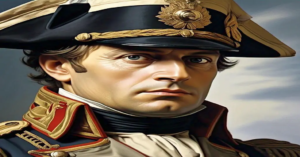
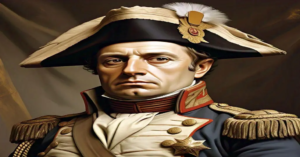
Napoleon Bonaparte was the man who would define the start of the 19th century. He has more documented victories than any other battlefield commander in history. I guess you would think, you know, in terms of people like Julius Caesar or Alexander. And I would say in many ways he’s greater. He’s one of the most influential military leaders of all time.

Napoleon was exceptional in that his men truly loved him. From a relatively humble background, he rose to become the master of Europe. For somebody like that to become emperor. The ruler of the largest empire that Europe had seen really since the Middle Ages is just amazing.

Napoleon Bonaparte Early life

This is the rise of Napoleon. This government feels obliged to report this new crisis to you in full detail. Whether Russia claims provocation. What matters is that Russia has been wrong in its response. With this, we will be able to transform the jangling discords of our nation’s terror. Napoleon Bonaparte began his life in relatively modest circumstances.

He was born on the 15th of August 1769 on the island of Corsica. France had only acquired the island from the Republic of Genoa the previous year. Bringing it under French rule before the French Revolution. Napoleon is someone who is essentially condemned to mediocrity. He came from the minor gentry of a part of France that had only incorporated into France shortly before his birth.

His family is moderately influential on a local level. He has a large number of siblings and a lot of outdoor activities, not a lot of luxury, a mother who is very much down to earth, and a father who is involved in politics.

Napoleon Bonaparte Family

His family is moderately influential on a local level. He has a large number of siblings and does a lot of outdoor activities, not a lot of luxury. A mother who is very much down to earth and a father who is involved in politics.

But in many ways, he is a bit useless. When it comes to things like, you know, running the family finances, gambling, or, you know. Then, he leaves the family impoverished. So Carlo is probably not somebody that a young boy would necessarily look up to.

Carlo Bonaparte and his wife, Letizia, pregnant with Napoleon, had resisted the French. Takeover alongside the Corsican Nationalist leader Pasqual. This, however, ultimately failed, and Carlo Bonaparte, reading the writing on the wall, decided to change.

Napoleon Bonaparte Personal Life

The French took over CA; it took them about a year to more or less assert their control, and Carlo Bonaparte and, by extension, the Bonaparte family switched from being sort of pro-powerly freedom fighters for Corsican independence to being collaborators, and I think that that’s something that troubled Napoleon as he grew up.

But the French monarchy was very keen to integrate Corsica, so a great way of integrating any new territory is to get to know prominent families to send their sons either into the civil service or, in Napoleon’s case, into the army.

He manages to become a military officer, but an artillery officer, which is not a particularly socially distinguished thing to be because to be an artillery officer, you have to know things, and knowing things is very low class as far as the aristocracy is concerned.

Napoleon Bonaparte Political & Social changes 

Napoleon Bonaparte


So, in the world of France in the 1780s, which is highly aristocratic in its outlook, Napoleon is if you want a future; if you want to do something big, you do it via the French route. Cora isn’t going to get you anywhere because PO is that sort of buffer; he’s that roadblock.

What Napoleon needed was a world-shaking political and societal upheaval that would remove the existing system of power and enable him to rise rapidly through the ranks of the French military. As it turned out, he would get his wish. The people of France were rising up, disillusioned with their out-of-touch monarchy. France was going to revolt.

Napoleon Bonaparte French revolution

So, the revolution of 1789 has some really deep roots. It’s rooted in the dysfunction of the French monarchy and its inability to fund its ambitions to be a world power. While having a very hierarchical internal social structure where being rich and powerful essentially means that you don’t have to pay very much tax, and this comes to a tremendous climax in the 1780s, ironically.

After the French had been on the winning side of the war of American independence. Then, they’ve built up such an enormous burden of state debt by that point that their rickety tax-collecting mechanisms just cannot cope anymore.

Napoleon Bonaparte Tax Reforms

The only way of reforming the tax system is to reform the entire structure, the political and social structure of France, and it’s, you know, I suppose, an alter. It’s like picking at a woolen sweater.

If you start pulling at a thread, the whole thing unravels, so the French Revolution starts out with tremendous optimism; it starts out with the belief that huge changes can be effected in society, but it also starts out with fear, paranoia, and conspiracies.

Napoleon Bonaparte – Monarchical Constitution?

The reason why the Parisians stormed the Bastille on the 14th of July is that 3 days earlier, the king’s brothers and other high-ranking aristocrats had sacked the reformist government and were trying to do away with the changes that had already been pushed.

After July of 1789, the National Assembly that had been gathered together spent two years trying to put together a monarchical constitution to have Louis the 16th on the throne to have political participation, to have rights, to have everyone paying their taxes, and everything being good and great, but it continually runs into deeper and deeper problems and crises.

Civil War,1791

Enlightenment rationalism encouraged people to pursue reforms. It also told them they could reform the Catholic Church, for example. But trying to reform the Catholic Church runs into the opinion of the upper echelons of society. This is one of the profound chasms that opens up within French society.

So by 1791-1792, you have a state of latent civil war. All these tensions that have been brought out over the previous three years are still brewing at the center of this Civil War. Where the Jacobins, led by Maximilien Robespierre. The Jacobins are Republicans, and they are Republicans of a radical bent.

Big Opportunity 

These are people who wanted the execution of Louis the 16th. Really, they were looking for a very profound political transformation of France. They don’t just want a sort of change at the top. While keeping the existing system pretty much as is. But they’re very happy to use violence and terror to push the revolution forward.

The Jacobins had a strong influence on Napoleon. When he returned to France and rejoined his regiment in Nice in June 1793. Here, he wrote an account expressing his support for the radical republican group.

Not long after, perhaps as a result of this pro-Jacobin writing. Napoleon received his first significant opportunity.. He was called upon to lead the French artillery. As the Republican forces laid siege to the strategic port city of Toulon, a natural harbor. To this day, it remains the main port of France.

Basically, he thinks he’s one and there. Actually, he retreats to communicate that success back to his superiors. But he completed it a little bit ahead of the close of play. Then, the French managed to call up reinforcements.

Credit to Napoleon

Napoleon throws in his consular guard, and he plugs some gaps in the French line, uh, and then you get the arrival of Des, who comes in at a crucial moment and really catches, I think, the Austrians, who really think they have won, uh, by surprise and bundles them back to where they had started.

Inflicts, you know, a substantial number of casualties on the Austrian side in terms of killed and wounded. But above all, captured, so that really wrecks the Austrian Army.

Napoleon is saved again from possible defeat by General Desaix, who storms onto the battlefield of Maringo and gets himself killed in saving the day, enabling Bonaparte to claim all the credit.

Peace and Prosperity

France will find itself by 1801 able to be at peace, able even to bring the British to the peace table for the first time in this whole period because the British now know they have no Continental allies and no sense of how they could prosecute the war any further.

So, the Peace of Amiens was initially agreed to in late 1801 and formally signed in 1802, and for the next year or so, Napoleon really does appear as the PE maker of Europe.

He’s established a settlement where France is as dominant as a nation might want to be in that sphere of Western Europe, but it will turn out to be only a pause in the larger military story.

Artillery officer turn to the emperor

As a consequence, the regime becomes exactly what Napoleon Bonaparte thought it was I mean, Napo knew his history, and he knew the story of Charlemagne, who had been crowned by the pope on Christmas Day 800, and of course, that relationship implies that the emperor of the West owes his authority and legitimacy to the church as a mediator between God and secular power.

Really, Napoleon didn’t want to give that kind of impression in just 10 years. Napoleon Bonaparte went from an unknown artillery officer to the emperor of the largest empire in a thousand years.

His ambition did not stop there and would see Europe in an almost constant state of war for the next decade, an era aptly named the Napoleonic Wars. Napoleon had the opportunity, as he’d had the opportunity before, to sit back into being a great power.

His Legacy

But the future would prove that was never enough for him; there’s always more to strive for, and he, of course, after 1804, embarked upon the greater part of his territorial conquest with which he took Spain after 1808 and Russia in 1812.

It’s a fundamentally undemocratic regime, but a military victory. Really, you need to supply military victory. After the military victory, of course that came a route to conquest without limit. Although Napoleon’s military successes faltered and his mastery over Europe proved to be short-lived.

His legacy has endured to this day. If you look at France, it’s really under Napoleon’s direction and encouragement that the institutions of modern France are really created; its creation is promoted right down to all the codes of law. In every direction you look, you can see Napoleon’s hand.

Biography of Elizabeth-1

Queen Elizabeth I: The Woman Who Defined an Era

Elizabeth-1

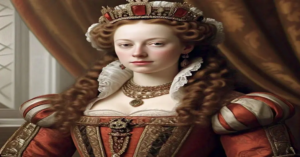
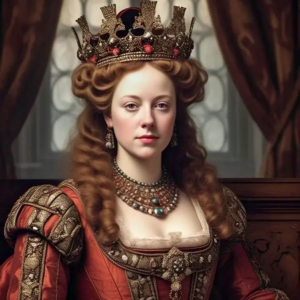
Elizabeth – 1 was a rainbow of characteristics. She was cunning. She was vain. She was kind, she was intelligent, and she was very manipulative. The daughter of Henry the Eighth and Anne Boleyn, Elizabeth the First’s childhood was tumultuous. After her father executed her mother, her father and brother died. Elizabeth’s older sister, Mary, took the throne. Mary’s Catholic background and Elizabeth’s Protestant background kind of created a situation.

Elizabeth-1 Early Life

Elizabeth the First, queen of England, 1533 to 1603. Elizabeth got to birth in Greenwich on the seventh of September at 15:33. She was the daughter of Henry the Eighth and Anne Boleyn.

They executed Elizabeth’s mother, Anne, for adultery. When Elizabeth was just 2 years old. Henry’s last wife, Catherine Parr, made sure Elizabeth was highly educated and could speak several languages fluently.

Elizabeth-1 Career

When Henry died in 1547, Elizabeth’s half-brother Edward became king, and she lived with Catherine Parr. Edward died in 1553, which meant that Elizabeth’s old half-sister Mary, who became Queen Mary, was determined to return England to Catholicism.

Because Elizabeth was Protestant, she imprisoned Mary in the Tower of London. Mary died from illness in 1558, making Elizabeth her successor to the throne. She became Queen of England at age 25. Elizabeth returned England to Protestantism. Developing the Church of England while maintaining some Catholic elements such as the crucifix. Therefore appeasing both sides of the privy.

Elizabeth-1 – issue of cathelics ?

When Mary just really couldn’t trust Elizabeth, she threw her in the tower for a while and let her live there. Mary died in 1558, leaving Elizabeth as Queen of England.

Her father and her sister had created such turmoil between the Catholics. And the Protestants, falling in and out of favor. Our people were now sure what they should say that they believed in Elizabeth.

Politics 

Elizabeth-1

Elizabeth carefully rewarded the Book of Common Prayer and said if you’re close enough to this, it’s good for England. Elizabeth set the stage for the economy and the arts, particularly fashion and theater, to flourish.

The council shrank. And reduced Catholic influence through member removal. Elizabeth assembled experienced and trustworthy advisors, including William Cecil, Lord Burleigh, who was her secretary of state. And Sir Francis Walsingham, in charge of gathering intelligence.

Personal Life

Nicholas Bacon, lord keeper of the Great Seal, and Nicolas Throckmorton, ambassador to France. One adviser, called Robert Dudley, Earl of Leicester, was very close to the Queen and may have been a romantic interest.

Despite numerous courtships and expectations to continue the Tudor dynasty with an heir, Elizabeth declined marriage, stating that the welfare of her country was her priority to an insistent Parliament.

Elizabeth-1 – Golden era of English

During Elizabeth’s reign, England saw a golden age of progress; trade expanded rapidly, bringing in wealth, and exploration brought prestige to the country. In 1580, England saw a golden age of progress; trade expanded rapidly, bringing in wealth, and exploration brought prestige to the country.

Elizabeth-1 – English poetry, theatre, and music raise

Francis Drake became the first Englishman to successfully circumnavigate the earth. And five years later, Sir Walter Raleigh formed a colony on the east coast of North America named Virginia.

The arts also flourished in theatre, poetry, and music with such playwrights as William Shakespeare. A big challenge would face Elizabeth in 1588. In 1587, Elizabeth had her cousin Mary, Queen of Scots, her nearest heir, executed.

Battle with Spain

Elizabeth imprisoned the Catholic Mary as a threat to the throne. Especially as there was no marriage or Protestant heir produced by Elizabeth. Then, the uncovering of a conspiracy to overthrow the Queen ended in Mary being tried for treason after years of surveillance.

After Mary’s execution, Catholic King Philip II of Spain launched an invasion of England to remove Elizabeth and restore Catholicism. As he launched the Spanish Armada, Elizabeth made a speech to the English soldiers at Tilbury.

Death

I know I have the body of a weak, feeble woman. But I have the heart and stomach of a king, and of a king of England. The English Navy, with help from inclement weather, would severely defeat the invading Armada on the 24th of March 1603. Elizabeth died at Richmond Palace. As there was no Tudor heir, the dynasty would come to an end. Then, the Protestant James VI of Scotland would succeed her.The son of her cousin, Mary, Queen of Scots.

Dictatorship 

Because she’s a female monarch, she knows that she can use her appearance in court to create a kind of loyalty. Then, affection for her from the quarters not only came through appearing in fantastic outfits. But also in being painted in fantastic outfits that symbolize her leadership.

Reason Elizebeth – not to marry 

In 1567, Elizabeth arrested her cousin Mary, Queen of Scots, for her alleged involvement in several assassination attempts and had her executed in 1587. Though Elizabeth’s reign began at age 34.

She had yet to marry and produce an heir. It’s very clear that she didn’t want to do what her sister had done, which was to marry a powerful European monarch who would regard himself as a co-ruler.

It’s also likely that she didn’t want one of her own subjects to become her husband, which would give him a kind of power and authority over her. In 1588, Elizabeth’s Navy defeated the invading Spanish Armada, the most powerful force in Europe at the time. The king of Spain, who had thought that God was on his side.

End of Tudor dynasty

I had told him to do this, but God does not favor me. I was wrong; Elizabeth’s triumph was breaking the King of Spain. Elizabeth the First died on March 24th, 1603, after ruling for 44 years.

Her death and the succession of her cousin, James the First, king of England and Scotland, would end the 117 years of the Tudor dynasty. So, Elizabeth I endures as a shrewd survivor. She had a lot of odds against her from the time of her birth onwards.

Not only did she survive, she survived with great success. Mark Twain is often considered America’s first celebrity. Because he was so good at capturing the public imagination, it became important to him to have a public image.

Julius Caesar Story

Julius Caesar: The Man Who Changed Rome Forever

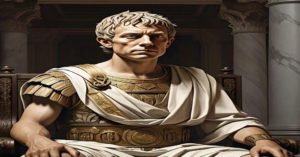
During the time of the ancient Roman Empire, many men wrote their names in the eternity of history; some will be remembered as brave and astute commanders, others earned fame for their cruelty and cowardice, but one name still echoes century after century: Gaius Julius Caesar.

Julius Caesar

Julius Caesar Early LIfe

Julius Caesar got birth on July 13th, 100 BC. As a child, Caesar already proved himself as an adventurer, as he was an active and good-spirited boy, but at just 16, his life changed abruptly; his father passed away, and Julius suddenly became the head of his family. Julius was the nephew of Gaius Marius, a great general and politician.

He became famous for his military victories and for reorganizing the model of the Roman legions. Marius was known for his magnetic personality. Also, he was immensely respected by the soldiers who fought alongside him, which influenced the character of the young Julius Caesar, who saw in his uncle a model to be followed.

But during Julius’s adolescence, his uncle waged a civil war against ambitious Lucius Cornelius Sulla. They fought for the control of the city of Rome in the midst of this civil war. Julius Caesar married the daughter of his uncle’s political ally; his beloved’s name was Cornelius Cinna. Together they had a daughter named Julia.

Julius Caesar personal profile

Attempting to get away from Rome as quickly as possible, Julius enlisted in the army, where he fought in distant Turkey. Julius served in the army with great prominence, even receiving the civic crown as a reward for his heroic acts.

His superiors and fellow soldiers quickly recognized him, showing a promising future as a middle-tier commander, but in 78 BC, Julius received the news that his rival had died. Cornelius Sulla had died suddenly; for Julius Caesar, that meant a chance to come home after fulfilling his contract.

In the army, Julius returned to his home; however, to his misfortune, Sulla’s government confiscated his inheritance. To survive, Caesar used his powerful voice and his oratory skills to become a successful lawyer, and by working hard, Julius Caesar was able to rebuild his family’s social status.

Julius Caesar victory over pirates

But he vowed to seek revenge on them across the seas upon his release. The pirates mocked Julius throughout the journey. They ridiculed his arrogance. But at last, they accepted his cash offer. When he was finally free, Julius used his oratory gifts to attract sailors. Warriors to his cause, and using the rest of his fortune, he set up a fleet of ships.

Caesar spent several months sailing and facing pirate ships. He plundered the captured ships, which allowed him to make a profit from his victories. When Julius finally found the pirates who had kidnapped him. Then, he defeated them in battle and had the survivors crucified.

The pirates paid a high price for mocking Julius Caesar, which increased Caesar’s fame. Already renowned in Rome, upon returning, the army recalled him. He left to fight in foreign lands. Julius stood out again on the battlefields. Thus, the position of military tribute. Which guaranteed him the right to command many soldiers and run for political office.

Julius Caesar political career

Julius Caesar returned to Rome in 69 BC. That year, he began his political career, taking up a new post in the Roman Senate. His wife, Cornelia, had become pregnant again. Everything in Caesar’s life seemed peaceful. But to Julius’s misfortune. His beloved wife died that year. Due to a birth filled with complications that stole her life and that of her baby shortly after his wife’s funeral.

The sentence is already in active voice in Spain. He was the administrator of the territories controlled by Rome. One day, Julius decided to get to know the city of Cadiz better. Where he was living. After travelling some distance, he found a statue that time had worn down.

When Julius approached, he noticed that it was a statue of Alexander the Great. As he approached the feet of the statue. Caesar felt an enormous torment and began to cry. He was already 33 years old; he felt he had not conquered anything great in his life yet.

Julius Caesar was equal to Alexander the Great

On the contrary, Alexander the Great at that age had already conquered an empire. At that moment, Caesar swore he would not rest until he was equal to Alexander in his conquests. Julius Caesar fulfilled his role in Spain.

He gained fame as a good governor. And subdued local tribes who had revolted against the Roman occupation. However, Caesar was not happy to spend so much time away from Rome. After completing his service in Spain, he returned to his hometown.

Upon his return to Rome, Julius focused his efforts on achieving new political positions. Julius wanted to be Pontifex Maximus, the highest priest of the Roman religion, but he was running against two other reputable senators to support the campaign. Caesar spent most of his fortune. Julius Caesar knew he could not fail to win this new position.

Julius Caesar governance

If he failed, his political career would be over, and he would be broke for the rest of his life. To get around this problem, Julius allied himself with Marcus Licinius Crassus, known for being the richest man in Rome. Crassus paid off.

He covered half of Julius Caesar’s debt and secured the rest, becoming a valuable ally. Julius was able to win the election and take on the position. So he had hoped for, but he needed to pay off a huge debt to Marcus Crassus. That other powerful men noted the alliance.

General Pompey had importance in the Roman Senate. Other senators respected, even feared, him. Pompey did not like Julius Caesar’s growing ambition; he started watching that man who seemed to stand out from the crowd.

Julius Caesar won election

The years have passed; in 60 BC, Caesar became consul, the highest office in the Roman Republic, as a consul. Julius Caesar obtained great authority in the city of Rome to the point where he could even be immune from the laws of the city and be acquitted of any criminal charge.

Caesar won the election again, and as consul he proved to be a dangerously ambitious man that year. Julius married Calpurnia, who would be his wife for the rest of his life. General Pompey publicly showed his aversion to Julius Caesar and also his discontent with Cuz Crassus to solve this issue.

Julius met with Pompey and Crassus to form a new political and military alliance. This alliance became known as the first triumvirate, in which the three most powerful men of Rome would work together to rule Rome.

Julius Caesar army

Pompey increased the number of soldiers on the streets of the city, providing more security to the population. Crassus bought a large naval fleet and wanted to establish trade routes in distant lands such as Syria and Egypt, increasing his wealth and bringing new products to demand.

Roman markets and Caesar took the military command to conquer new lands for Rome. Julius Caesar’s fortune seemed promising again; he would not waste the opportunity to immortalize his name in history.

Julius Caesar was elected to the post of Roman consul, gaining great authority in all the territories conquered by Rome, but to achieve such an important position, Julius Caesar incurred a gigantic debt to Marcus Crassus, the richest man in Rome.

Caesar goals

Caesar had not yet forgotten that day at the foot of the statue of Alexander the Great; the desire to match Alexander and his conquests was still alive in Julius Caesar’s heart. The best way to achieve his goals was to conquer new territories for Rome, thus confiscating the riches and receiving part of the taxes of the conquered cities and villages.

It was there that Julius Caesar focused his attention on going Gaul was an ancient region classified by the Romans comprising territories that are now France. Belgium and parts of Italy and Germany are located today, for the most part, in Gaul, which was a wild territory full of forests and inhabited by several very hostile Celtic tribes.

With these obstacles, Gaul was not easy to invade, much less to conquer, because it was a difficult task. Julius Caesar made Gaul the main target of his ambitions. On April 58 BC, Caesar marched towards Gaul in command of four legions, some twenty-four thousand soldiers.

Victory over the Gaul tribe

His regions were on top of a hill, gaining a strategic position against the Gauls. The soldiers hid the other parts of the regions on a different hill covered by trees. The Roman regions managed to stop the Gauls’ initial advance.

It was the start of a long and arduous struggle that would last almost a whole day. At the ideal moment, Julius ordered the hidden legions to attack the rear of the Gaul army. The Gauls resisted for some time. But the discipline and determination of the Roman legions defeated them; to take advantage of their enemies, the Helvetians surrendered.

Julius allowed many to be freed, provided they returned to their lands and agreed to work the crops to feed the legions. Others were not so lucky. They sent them as prisoners to Rome. Where the captors would sell them as slaves… This heroic victory marked the beginning of several conquests in Gaul.

Gaul surrendered

Soon after, Caesar and his legions fought the Germanic tribe of the Suevi and achieved another major victory. In the years that followed, Julius Caesar continued to advance in the Gaul territory, establishing new alliances and, in so doing, subjugating tribes or, when necessary, destroying cities and settlements.

Obviously, the Gauls did not peacefully accept the Roman occupation; at times, some tribes rebelled, which provoked new battles. Having suppressed the Belgian rebellion in 55 BC.

Completely, Julius Caesar nearly conquered Gaul. Caesar had accumulated enough wealth to pay his debt to Crassus. And after that he would have enough to live in peace.

60 senators attacked

His nephew, Marcus Brutus, whom Caesar held in great esteem. In order not to arouse any suspicion. One of the senators handed over a parchment with a petition for Caesar to assess. The other senators walked to him, pretending to be interested in reading what was written.

Then, the nearest senator, who had hidden a dagger in his cloak, grabbed Caesar’s robe. Julius Caesar tried to dodge his attacker. But the senator started yelling for help, demanding the other members of the conspiracy to advance.

Sixty senators attacked Caesar. Being mortally wounded by about 23 dagger wounds. One of the last to do it was his own nephew, Marcus Brutus, who dealt the fatal blow in an ironic touch of fate.

Death

Caesar fell at the feet of Pompey’s statue; when he looked up, he saw the face of his nephew, and with his last bit of strength, he pulled a part of his cloak to cover his face, avoiding the shame of looking into the traitor’s eyes.

Julius Caesar survived countless battles and challenges in his life, but now, he lay motionless on the cold floor of the Roman Senate. There are no accurate accounts of Julius Caesar’s last words.

Some believe he sent it to his nephew, Brutus. This sentence was written by William Shakespeare and immortalized in the play in which he portrays Julius Caesar, but the writers Suetonius and Plutarch believe that Caesar did not say a single word at the moment of his death.

After Caesar’s assassination, most of the senators fled from the Senate, fearing they would be caught by the soldiers who were guarding the city and the conspirators. They believed that Caesar’s death would bring the city’s political power back into the hands of the Senate.

Public protest after Caesar death

However, they did not expect the emerging popular uprising. Caesar was seen as a hero by the majority of the population, and when the news of his death spread, the citizens of Rome began to gather to protest against it.

Julius Caesar’s body was brought to be cremated in a public place according to the tradition of the time; a massive number of people attended the ceremony, and as a farewell gesture, they threw wood and personal objects to the funeral pyre caused the fire to rise to such an extent that it damaged the Senate building.

The crowd ran after the conspirators Cassius and Brutus, who, amid that confusion, managed to flee to Greece. Brutus, perhaps consumed by regret, ended up committing suicide in 42 BC.

Emperor add Caeser sirname to their name

Queen Cleopatra and her son, Sigh Aryan, were in Rome at the time, but they returned to Egypt a few days after Julius Caesar died in a public square. Mark Antony read the will of Julius Caesar.

He pointed out his great-nephew Gaius Octavius as his successor and gave him the right to use the name Caesar. Gaius Octavius changed his name to Gaius Julius Caesar Octavius, and a few years after his uncle’s death, he was crowned as the first Roman Emperor.

The following Roman emperors began to include the surname Caesar in their own names. The great story of Julius Caesar came to an end, but the name of this remarkable man became synonymous with greatness.

Alexandar the Great Autobiography

Alexander the Great: The Conqueror Who Shaped History

Alexander the Great

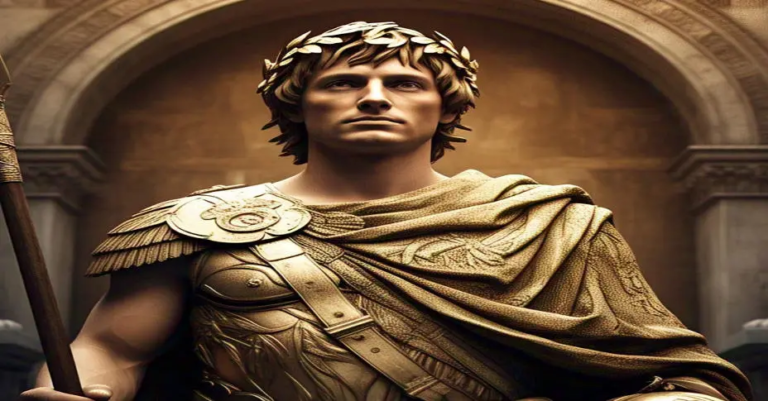
In 9th BCE, King Darius of the Persian Empire attacked Greece. This overwhelmed many temples and thousands of statues present here, and for centuries to come, every child of Greece became thirsty for the blood of the Persians. A son, Alexander the Great was born in a small town in Macedonia, Greece.

Alexandar the Great Early Life

He was not an ordinary son but the son of God. Alexander, in 334 B.C., made his kingdom from this small child. He took revenge for his country and destroyed the entire Persian Empire. Now the map of the world looks something like this. 26th B.C.: Alexander’s next target is India on the border.

But suddenly he turns his back and returns to his country, Macedonia. These interconnected elements forged Alexander, history’s greatest warrior, king of kings, emperor, and god. He was born in the first city of Macedonia. As soon as he was born, all the people of the city started considering him the son of Greece. God and his mother, Olympia, also supported him in this.

Now, like all the fathers of the world, his father, Felipe, also wanted to make his son a capable king, for which he got him trained through the Buffalo Colleges present at that time. The name of the world’s most famous philosopher, West Indies, is also included in all these schools, who, in just three years of training, instilled in Alexander such an understanding of patience, open-mindedness, and diplomacy.

Alexandar the Great & Immortal army ?

Everyone dreamed of dismantling the empire. So, to achieve this, in New Delhi, he established a rest house. He started establishing his status in the south, and during this time he started to attract the armies of many cities to his side by joining them with the Indian army so that he could gain the loyalty of all these people when needed.

During this time he faced the fact that Alexander’s army was double the army of the first army, but despite that, Alexander killed them only on the strength of his war strategy and courage.

Obviously, this was a very big thing in itself, due to which the stories of the war of Alexander, the name of Agni, and the immortal stories of his army are described in history. In 9th BCE, King Darius of the Persian Empire attacked Greece.

Alexander the Great politics

Where further sharpened Alexander’s political qualities, and the first glimpse of this was seen by the people of Macedonia when, at the age of only 10, Alexander easily trained an excited horse and solved other problems, and after that, at the age of only 18, he, along with his father, took part in the Battle of 6 Loiyan.

He defeated his supporters and half of the army, and this was a major turning point in Alexander’s journey. At this time, he demonstrated his greatness, and after that, obviously, the confidence of the people kept on increasing, and with that, the arrogance of the center and the hatred towards the empire increased.

The West Indies is also included in all these schools, which in just three years of training instilled in Alexander such an understanding of patience, open-mindedness and diplomacy, which further sharpened Alexander’s political qualities, and the first glimpse of this was seen by the people of Macedonia.

Alexander the Great is immortal ?

At this time, he demonstrated his greatness, and after that, obviously, the confidence of the people kept on increasing, and with that, the arrogance of the center and the hatred towards the empire increased. Everyone dreamt of erasing the empire from the world map, which was seen by every child and his father.

So, to achieve this, a New Delhi-based rest house was under set up. He started establishing his status in the south and during this time he started to attract the army of many cities to his side by joining it with the Indian army, so that he could gain the loyalty of all these people when needed.

During this time he faced the fact that Alexander’s army was double the army of the first army, but despite that, Alexander killed them only on the strength of his war strategy and courage. Obviously, this was a very big thing in itself, due to which the stories of the war of Alexander, the name of Agni and the immortal stories of his army are described in history.of the Persians.

Alexander the Great is not easily with Indian huge army

As soon just reading this gives goosebumps to today’s people and as you know he is not a human being, he has to repeat the mistakes of history which in today’s time are covered in dust in the cupboards.

In this war Alexander got a small glimpse of the power of the Indian Army, after which he won this war with such a big army in his name by using his military skills and cunning intelligence. Despite not being a small nation, after this victory, with the help of his superior strategy and intelligence, Alexander captured many parts of Asia Minor and the places he could not reach surrendered to him on his own.

Alexander the Great promote complete justice, equality and liberty in Persia

Alexander the Great

But even after capturing a part of Persia, he never destroyed the culture of that place, rather he gave freedom to all the Persian commanders, leaders and governors to live according to their wish on the basis of their honesty. This resulted in Alexander winning the hearts of many people by adopting Aristotle’s method of winning hearts without force.

And it can only be said that Alexander’s diplomacy and cleverness is that even after fighting the war, he made a place for himself in the hearts of the people and got control of all the southern parts of the empire. But it is said that the thirst of a lion cannot be quenched with water. And Alexander’s aim was already the destruction of the Persian army.

To fulfill this aim, he started moving with his army towards the most important part of the Persian army. Where he faced the biggest Persian army till date. And I am saying this because I am not aware of Alexander’s army. Because even after increasing his empire so much, this army was much bigger than Alexander’s army.

Alexander the Great Strategy

Now, there were only 2700 people in the army of the king and more than 100,000 people in the army of the king. But your king friend, this woman was well aware of Alexander’s tricks and that is why, in the battle with Alexander, despite having a bigger army, he advised him to stand up and fight.

However, even after a lot of efforts, Alexander could not save his army from Alexander because when the war between these two states started, then using the strategy of Gautama and the army of the king, Alexander used a strategy to kill Alexander.

Alexander first allowed the Persian army to attack his army. So that the Persian army would retreat, and then, as soon as the Persian army retreated, with the desire to win.

Alexander the Great battle with Persia

Alexander sent his convoy behind the Persian army through the gap created there and wreaked havoc there. The frightened Persian army started running away from there. Then his own commander killed him.

This war has been recorded in the pages of history as a war that changed the fate of Alexander because after this war, the biggest empire of the world was destroyed, and Alexander, who was clearly called the son of God, became the master of Asia at the age of just 25.

Not only this, now his empire was not limited to 200; now it had reached the Khan place, but now the question arises here as to whether it was used in 2009, probably not because of the position in which he made every possible effort to win the hearts of the governor.

Alexander the Great - all freedom to Public

And to make a good relationship with the common people. He did not force anything against the law or anything. On the contrary, he himself started celebrating their festivals. Not only this, he also banned any kind of war.

Governor Officer, and he married his enemy’s daughter, Dhairya, in return for which he got the honesty and love of the people as per the ad. But Alexander was a man with a cunning mind;

Only after people were well cared for. Did he accept him as king? And when the serial premiered. Taking advantage of the opportunity, he divided all the wealth into different parts.

His eye on great wealth of Indian sub-continent

This made the entire empire very famous, and in fact there was wealth, property, and business. But it is not true that the people stab the back of success. Because of his own army and commanders.

They were angry with this, and all of them started plotting against him. And they were so cautious about their success that when they came to know about the conspiracy against them,. They killed that person. And this thing and the intoxication of something do not let a person stop under any circumstances.

And Alexander had also gotten addicted to this intoxication. Hence, even after his people’s betrayal, he did not stop. But after the portion army, his eyes fell on the Indian subcontinent beyond the Eastern borders, the reason for which was India’s great wealth and this event of India.

Battle with Porus but nobody win

In order to capture the land, Alexander’s army crossed the Fiber Pass. And reached the Indian subcontinent. Where they faced the Porus king of the state of Porus. Which is today’s Pakistan, who at any cost did not want to let Alexander establish his kingdom on the land of India.

This is why a war broke out between the two. This war was the longest, most difficult, and most dangerous war to date for Alexander’s army. Because the rest of the kingdoms of the world had surrendered before the cunning mind of Alaknanda. But Porus was not ready to accept defeat even after months.

Even after the hard work of the king, he did not win. But his war skills and his passion impressed the emperor a lot. After which he himself not only allowed Porus to rule over the Indian subcontinent. But also gave him more kingdom.

Alexandar paralysed

But the surprising thing is that the king, whom no one in the world could defeat, died at a young age. But even after death, his body was not ready to accept defeat. And hence, even after six days of coronation, his body was not decomposing.

Actually, in June 323 BCA, Alexander reached Babylon, where he died after a fever of 10 days. After which his body got definitely embalmed, then his body did not decompose for six days.

However, if we believe the modern research on this, then Alexander had become paralyzed. Due to a stroke, due to which the demand for oxygen in his body would have been less. The pupils of his eyes would have become large, and his breathing would have become almost negligible.

Death

And because the doctors of that time used to check the breathing instead of the heart, that is why it could have happened. They prematurely declared Alexander dead. Which means that if he had lived for a few more years, his empire would have spread to many places in the world.

Although he could not rule the whole world due to dying at a young age, undeniably, it is only because of him. That we get to see a glimpse of Greek culture in every part of ancient times.

Not only this, even though his empire ended after his death. Remained it intact for the next two years through the age of the Greeks, which is also known as the Greek Empire.

Jo jeeta wahi Sikandar

This is Alexander’s great journey to India, and after the attack, it was collaborative. There was a love affair between Central Asia and Russia. Apart from this, at least there are 500 military forces worldwide. Today, millions of people live there, and there was no subsidy.

He taught his military tactics method to the people while going and going. Even today it is a standard part of military academy curriculam. If we believe in the theory, then Alexander was one of those people in history whose name has been translated in hundreds of languages ​​and cultures, such as Sanskrit, Roman, etc. Withdraw cases of expression. Jo Jeeta Wohi Sikandar in this too.

Sikander means none other than Alexander the Great. Now, before going to school, don’t forget to download it. I will tell you to download India. If you like the video, then definitely like the video and subscribe to increase your knowledge and turn on the question. Such interesting videos can never be seen.

Biography of Rani Laxmi Bai

The unwavering warrior Rani Lakshmi Bai of Jhansi

Rani Lakshmi Bai

Rani Lakshmi Bai Early life

Rani Lakshmi Bai declared to the world that a woman is not weak. If she sets her mind to it, she can do anything. There is one great person. Her family had good relations with Nana Sahib. It is believed that both of them were cousins.

Rani Lakshmi Bai Personal Life

Her father, Moro Pant Tambe, fought for the Peshwa of Bittur in the Bittur district court. So the Peshwa loved her very much. Here she raised Manikarnika as his own daughter. She was growing up with all the facilities of a princess.

Mother died in her childhood

Her nickname was Manu. She lost her mother at the age of 4. And she had to go through some tough times at a young age. As her upbringing fell entirely into the hands of her father. She completed her education. Also, she received training in martial arts, like horse riding, shooting, etc.

Rani Lakshmi Bai bravery

Valiant Rani Lakshmi Bai, who not only created history with her courageous deeds. But also she infused courageous energy in the minds of all women.During childhood, Manu was a very intelligent, meticulous student. She who wanted to learn everything. That is why her studies included activities like shooting, horse riding, fencing, and Mala Khamba.

Rani Lakshmi Bai Education

Teachers used to teach Peshwa Bajirao’s children. So Manu also started studying with those children. At the age of seven, Lakshmi Bai learned horse riding. At that age, she also became proficient in sword fighting and archery. Conveniently, she showed more strength than children.

Rani Lakshmi Bai heroic qualities

Rani Lakshmi Bai

In her childhood, Lakshmi Bai heard some mythological heroic tales from her father. She cherished the characteristics and noble qualities of heroes in her heart. Thus, Manu became proficient in using weapons at a young age.

Rani Lakshmi Bai grew up

Together, she practiced with her childhood friends Nana Sahib and Tantia Tope. Manikarnika  grew up very brave as her mother died. When she was just four years old. Later that day, the Maharaja died.

Using weapons and horse riding were Manu’s favorite games. Statue of Rani Lakshmibai of Jhansi, ISKCON Temple, Bangalore .

Rani Lakshmi Bai Marriage

Time passed, and Manu became marriageable. But by 1853, both her son and husband had passed away. Rani decided to adopt a son and look after the government . Now she did the same, and after adopting a son, Gangadhar Rao died on 21 November 1853. His adopted son was named Damodar Rao.But the company government wanted to snatch away her kingdom.

Rani Lakshmi Bai Welfare

Rani continued to do welfare work for the people with great wisdom for as long as she ruled. Therefore, she became the object of love of her people. As a queen, Lakshmi Bai had to stay behind the curtain.

This did not suit the free-thinking queen. She built a gymnasium inside the fort. And she made necessary arrangements for handling weapons and horse riding. Also, she prepared an army of women.

Adversities

That Governor-General at that time, Lord Dalhousie, had initially rejected. Damodar Rao’s claim to the throne was not hereditary. Again, he had applied the theory only when he tried to annex the state to its territories.

Rani Lakshmi Bai Kind nature

The queen was also very kind. One day when she was returning. After worshipping  Kuldevi  Mahalaxmi, some poor people surrounded her. Seeing them, the queen’s heart melted. She announced in the city that on a certain day. The poor should be given clothes, etc.

Rani Lakshmi Bai Life

Although the Maharaja had adopted a boy as his heir before his death. But Lord Dalhousie, the British Governor General of India, refused to accept the adopted heir. So Jhansi attacked to annex under the doctrine of the lost prince. 

The East India Company assigned a representative to the small kingdom. This representative was responsible for overseeing the kingdom’s administrative tasks.

The British Doctrine of Lapse and Jhansi

Under the Doctrine of Lapse policy, British India’s Governor  General  Dalhousie decided to merge the Jhansi state with the British Empire.

Although Rani Lakshmi Bai took the advice of British lawyer John Lang. And she filed a case in the London court. But the British Empire would not permit any decision to be taken against it. So after much debate, it got reject.

Treasury seized

Then the British seized the treasury of the Jhansi state. And they ordered the deduction of the debt of Rani Lakshmi Bai’s husband,  Gangadhar  Rao, from the annual expenses of the queen.

Rani Lakshmi Bai Went to Raj Mahal

The British ordered Lakshmi Bai to vacate the Jhansi fort and palace. After which she had to go to Rani Mahal. Then the British took over Jhansi on 7 March 1854. But Rani Lakshmibai did not lose courage and decided to protect Jhansi at all costs.

Struggle with the British rule

Here Rani Lakshmi Bai started forming a volunteer army to fight the British rule. Lakshmibai recruited women into her army. And Lakshmibai’s women soldiers received training in warfare.

Jhalkari Bai Warrior

In this struggle, the common people of Jhansi also supported the queen. Jhalkari Bai, a brave and loyal warrior, was indeed a lookalike of Rani Lakshmibai. And played a crucial role in the Indian Rebellion of 1857.

War of 1857

In Rani Laxmibai’s war against the British. Aggressively, the British enforced their annexation policy, significantly impacting many Indian rulers. Significantly, the British annexation policy impacted Begum Hazrat Mahal and Begum Zeenat Mahal, the wife of the last Mughal emperor.

Bahudur shah involved

Mughal emperor Bahadur Shah himself was also a victim of this policy. Other notable figures affected included Nana Saheb’s lawyer Azimullah, the king of Shahgarh, and King Mardan Singh of Vanpur.

Tatya Tope support Jhansi

The British annexation policy drove Tatya Tope, a prominent leader, to take action against the British during the Indian Rebellion of 1857. In January 1858, the British army started moving towards Jhansi and surrounded the city in March.

Death of Rani Lakshmi Bai

Together, Tantia Tope and Lakshmi Bai planned a successful attack on the Gwalior city fort. Continue until they were able to seize the treasury and armory. Then the rebels proclaimed Nana Sahib as the Peshwa (ruler).

After Gwalior, Lakshmi Bai moved east to Morar to face another British counterattack led by Rose. Finally, British killed her on June 18, 1858.

British victory

British hanged her father, Moropant Tambe. After the fall of Jhansi. Her adopted son, Damodar Rao, did not inherit from the British. But British granted a grant to Damodar.

Every Indian citizen remembers Rani Lakshmibai for her sacrifices.

Rani Lakshmibai is indeed commemorated in bronze sculptures in both Jhansi and Gwalior, honoring her bravery. Even in this modern era, she is the true epitome of women’s empowerment.

As she could read scriptures and wield a sword with equal power to a man. Sadly, she did not fight to save her kingdom. But she fought for many other things as well.

Pround to be nation

From defending her adopted child’s right to live without being Sati Devi to fighting for her freedom. Actually, she was able to set many examples before society. That is why she reigns in the hearts of the people even today and remains immortal. History of the National Movement.

Inspired Mother

India Post released two postal stamps in 1957 to commemorate the birth anniversary of Rani Lakshmibai. Let every woman in today’s society draw inspiration from Rani Lakshmibai of Jhansi.

How did the daughter of Kashi become the queen of Jhansi, fight bravely with her son tied to her back, and leave the British dead?

Great Mother

Whenever the queen of Jhansi made for mention, a picture emerges in people’s minds. That picture is of the queen tying her son to her back. making her way with unyielding determination and bravery, so tearing the chest of the British. Whenever someone remembers Rani Lakshmibai, this picture must come in front of them.

Great warrior

However, even today people are unaware of many things about Rani Lakshmi Bai. Today we will share some interesting information related to the life of the queen of Jhansi.

We will talk about that queen, who, with her extraordinary talent. Where she forced the world’s biggest dictatorial country to change its policies.

Jhansi ki Rani Laxmi Bai

That queen who even today shows the world the path of women empowerment. That revolutionary woman, who is still alive among the brave women of India in the name of Jhansi ki Rani.

Autobiography of Margaret Thatcher

Margaret Thatcher: The Iron Lady of Politics

Margaret Thatcher

Magnaret Thaatcher Early Life

Margaret Thatcher began her career as the first female deputy prime minister. Her talent led her to study chemistry at Oxford University, and she immediately became involved in politics. After graduating in 1947, she worked as a research chemist and studied at the bar in her spare time. Then consultant, specializing in tax law.

Margaret Thatcher Married Life

In 1954, she worked as a consultant specializing in tax law. In 1951 she married the second Earl of Wellington, who was serving as finance minister. So they had the first of two daughters, a son and a daughter, in 1953.

Margaret Thatcher Early political career

First and foremost, she contested elections from the Dartford constituency in 1950. Did it. In this position, she took some sensational decisions.

Magnaret Thatcher won Parliament Election

The first time, Thatcher stood for Parliament in 1950 but was unsuccessful. Despite raising her voter turnout percentage by lobbying local voters. In 1959 she entered the House of Commons in the “safe” parliamentary seat of North Finchley, London.

Gradually, she won the political election for the second time in 1983. When she discouraged the sex circus group about death. She achieved the best by winning within her three positions. This victory was within an administrative group.

Margaret Thatcher Neglect Gramin Sanctions in India

In this document, you have shared the inner feelings of Margaret Thatcher’s political success at that time. And still continue with the neglect of Kerala Gramin Sanctions India. Apart from this, you have told about her objectives that she wanted to adopt. While becoming the prime minister, she then adopted.

Her role in Education and Indian Economy

Along with this, you have also told about the impact she made on education and the Indian economy. This also gave the knowledge of the impact of Margaret Thatcher’s prime ministership on the Indian people.

Document on her Autobiography

Margaret Thatcher

 This document has clearly presented the story of Margaret Thatcher’s life from her early years. Then about how she is becoming the Prime Minister. Her political objectives, her political views, and her religious views have also been briefly told.

This shows how Margaret Thatcher took an active political role. And how she transformed Britain into a more vibrant and independent country.

She was 1st Deputy PM

Hard calculations, Margaret Thatcher made to drive Britain’s economic growth. So she transformed Britain into a stable and successful economy. Here Margaret Thatcher began her career as the first female deputy prime minister.

Thatcher's main economic policies

1. Privatization: The government sector organizations increase competition by selling to private companies.

2. Income taxes reduced: The government reduced income taxes to increase investments in Britain.

3. Union Reforms: Reduce the power of labor unions, improve the business environment.

4. Inflation Control: Measures to reduce inflation through tight economic policies. Took.

5. International Relations: Strengthened relations with America, India, and other countries.

6. Deregulation : Reduce government control over businesses and create new businesses. Encouraged.

Falklands War—1982

In 1982, Argentina occupied the Falkland Islands, a British territory. Then Margaret Thatcher prepared for war; Britain achieved victory. This success increased her popularity.

The increase in population and increasing number of anti-democracy protests caused problems for it. Ultimately, he lost the support of his party on November 28, 1990. And stepped down from the post of Prime Minister.

Stormy Life

Later, Margaret Thatcher She lost her husband in 2003. After suffering from health problems for some time, he passed away on April 8, 2013.

Margaret Thatcher's Legacy

1. A group that led Britain to economic development Anna.

2. Another section criticizes it for not working in favor of poor people.

3.However, she gained the reputation of “Iron Lady” due to her strong decisions.

Her Biography explain how she was extraordinary

How an ordinary woman in world politics It indicates the development of a disease. People will forever remember leaders who take firm decisions and move forward with confidence, demonstrating remarkable courage.

What she made ?

Her bold decisions and strong leadership shaped Britain’s politics and economy. But those decisions affected international relations.

Her Quotes

Hearing the name Margaret Thatcher, leadership, patient decisions, and British economic reforms. So she is a leader who has left her mark on world politics. Actively participated in the Conservative Association in Oxford.

“I am responsible for my life. My decisions, my hard work, my beliefs—these are the reasons for my success.”

– Margaret Thatcher

Simon Bolivar Autobiography

The legacy of Simón Bolívar: how one man liberated South America

Simon Boliver

Simon Bolivar Early Life

Simon Bolivar was born in 1783 in a country where this disease was very common. And the loss of cows was very great. Simon Forsway’s family in Venezuela was very wealthy. But originally, he was from Spain. At the age of nine, both of Simon’s grandfather and father died. Many efforts Simon’s mother put into his education. But educating Simon was not an easy task.

Simon Bolivar Education

Ultimately, the education got completed only after the arrival of Simon Yodgyes. Both of them were very talented. For the next six years, until Simon Bolivar was 14, the Youngers taught him the benefits of the teachings of the great philosophers and physicians of Europe.

Among them was Rousseau, a philosopher—a believer in God and possibility. Here Rousseau believed that if diseases lie in the womb of the child. At that time, they ought to train the child to cure itself. During harsh conditions, we must teach the youngsters the skills to survive. Such as those found in Iceland, or the raging seas of the Gulf.

Mahi Fat Yodyegz explained to Sobchak. Along with schooling, Yodyegz taught Sobchak how to fight and how to survive in the city and the streets. In a difficult situation, Yodyegz taught Sobchak how to survive.

Simon Bolivar learned Philosophy

In 1797, Yordeguez had to leave Venezuela. Why? Simon Bolivar had joined a revolutionary movement that ended in disaster. At that time, there were many diseases in Venezuela. Where Spain wanted to destroy in its country. But after some time, both the brothers recovered, and they visited the capital of Venezuela. This brother was the second son of forswear.

Simon Bolivar Family life

Simon Bolivar

At first Simon Bolivar was sixteen years old. Then he married a sixty-eight-year-old wife of a high-ranking Spanish courtier. So he sent his wife back to Venezuela. But ten years later, his wife died of heart disease. His father buried her in the grave. And this second death gave him life. The king was in Paris, France, when Napoleon Bonaparte was the king and became emperor.

Battle with Spanish

When the troops reached Numungranada, there were only a few hundred soldiers in the troops. But his plan to put the Spanish troops under control was successful. By the time the Spanish forces got wind of the troops’ arrival, it was too late. The troops had won the battle.

Three days later, the troops reached Numungranada. In 1821, Simon Forsvere got appointed President of the Royal Commission of Corbima.

Caiafofo battle

The new royal commission had to encircle the countries of New Granada, Venezuela, Tamuto, and Italy. There was only one goal—Venezuela and Italy still had together to defeat.

In June 1821, Forsvere defeated the Spanish army at the Battle of Caiafofo. The next day, Venezuela also wanted to capture.

Married Life

As the President of Venezuela, Forsvere appointed Juan Santamaría. Here Forsyth did the same in New Granada. After that, he established Italy. Forsyth got engaged to Beneira Sain in Italy.

In 1824, Forsyth established a trading post at the Inner Mongolian Peninsula with the help of a group of his men. A few months later, Forsyth also established a trading post at the Inner Mongolian Peninsula. This new country took its name from Forsythia.

Simon Bolivar become Peru President

Simon Bolivar became president of the Force of Peru, Forivima, and the Royal Assembly of Corfu (which included Granada, Venezuela, and Ituido). So he wanted to form a union of Hispanic-American nations.

In 1826 a conference held in Peru at which representatives from the four countries as well as Central America and France attended. Finally, this conference did not come to fruition. But it was certainly the beginning of international cooperation.

Simon Bolivar empire collapse

In 1826, the empire of Simon Force began to collapse. Venezuela and New Granada did not want to be together. After that, a domestic crisis began. Then Force left the country to try to kill the clerk of Corbofima. But Simon Bolivar did not succeed in that either.

Simon Bolivar fear of Wife

The diseases that he wreaked havoc on the country were worse than the war he waged. In 1928, the soldier was shot in the head at Korba. But due to the fear of his wife Bhanuera Sainj, he ran away. He got up, took his horse and rope, and ran towards the door.

Simon Bolivar Murderer enter

But his wife, Bhanuera, stopped him from doing so. The voices coming from outside were, “Down with the dictator! Down with the soldier!” Suddenly Bhaneura opened the window above him and looked out. Then he signaled the soldier. As soon as the soldier jumped out of the window. There door of his cabin broke, and the killers entered through it.

Simon Bolivar Unbelievable death

But then Bhaneura raised his hand and ran towards the killers. Bhaneura’s attack frightened the killers. Bhaneura explained to them that the soldier was not there in the cabin. He had disappeared somewhere. Eventually, Forcery realized that his life was in danger in the very countries he had conquered.

So, in 1830, Simon Forcery left the South African Expeditionary Force and decided to go to Mayo. While he was about to go to Mayo, he got the news that the situation in Mayo had worsened. Forcery then remembered his fate. After that, he lived with one of his admirers, Spencenstein. On 17 December 1830, Simon Forcery died of T.F.