Ganesh Utsav Secrets: Hidden Traditions That Will Surprise You
Ganesh Utsav: From Sacred Ritual to Global Cultural Movement
Introduction: The Elephant-Headed God Who Unites Millions
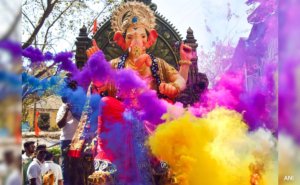
Every year, as the monsoon clouds begin to part over India, streets and homes burst into color, chants of Ganapati Bappa Morya echo through neighborhoods, and the scent of incense mingles with fresh modaks. This is the season of Ganesh Utsav, a celebration of Lord Ganesha, the elephant-headed deity revered as the remover of obstacles, the harbinger of wisdom, and the patron of arts and sciences.
But Ganesh Utsav is not merely a festival. It is a multi-layered cultural phenomenon—a blend of myth, devotion, politics, community, art, and even environmental consciousness. From its ancient Vedic roots to its reinvention during India’s freedom struggle, and from intimate household rituals to massive global processions, the festival reveals how faith and tradition continuously adapt to changing times.
This blog dives deep into the history, symbolism, rituals, controversies, and modern transformations of Ganesh Utsav, while also reflecting on its timeless relevance in a fast-paced globalized world.
1. Origins of Ganesh Worship: Between Myth and History
1.1 The Birth of Ganesha
The story of Ganesha’s creation is as fascinating as his form. According to the Shiva Purana, Goddess Parvati fashioned him from turmeric paste as a guardian for her chambers. When Lord Shiva returned and found the boy blocking his entry, a furious battle ensued, ending with Shiva severing Ganesha’s head. To console Parvati’s grief, Shiva replaced it with an elephant’s head, granting the boy immortality as the foremost deity of worship.
This myth is layered with symbolism—Ganesha’s head signifies wisdom, his large ears receptivity, his broken tusk sacrifice, and his potbelly the universe itself. Unlike many deities, Ganesha transcends sectarian boundaries and is worshiped across Shaivism, Vaishnavism, Shaktism, Jainism, and even Buddhism.
1.2 Early References and Spread
The earliest known references to Ganesha date back to the Gupta period (4th–6th century CE), when he emerged as a distinct deity. Archeological evidence of Ganesha idols has been found across India, Nepal, Cambodia, and Indonesia, revealing how Indian culture spread through trade and pilgrimage.
By the medieval period, Ganesha became the “Vighnaharta” (remover of obstacles), invoked at the beginning of rituals, journeys, and new ventures—an enduring practice that survives in homes and businesses today.
2. The Birth of Ganesh Utsav as a Public Festival
2.1 Domestic Rituals in the Puranic Age
Ganesh Chaturthi, marking Ganesha’s birthday, was historically celebrated in private households. Families would craft clay idols, perform puja, and immerse the deity in water after the rituals.
2.2 Lokmanya Tilak and the Freedom Struggle
The festival underwent a radical transformation in 1893, when freedom fighter Lokmanya Bal Gangadhar Tilak turned Ganesh Utsav into a public celebration. At a time when the British banned political gatherings, Tilak cleverly used the religious festival as a platform to foster unity, nationalism, and social reform.
Large pandals (temporary shrines) sprang up across Maharashtra, where people gathered for prayers, debates, plays, and patriotic songs. What began as devotion became a tool of resistance and empowerment—a reminder that festivals are not just rituals, but catalysts of social change.
3. Rituals and Traditions: The Spiritual Heart of Ganesh Utsav
3.1 The Installation of the Idol (Pranapratishtha)
The festival begins with the installation of clay idols of Ganesha in homes and pandals. The ritual of pranapratishtha—infusing divine life into the idol—is performed by priests chanting Vedic mantras.
3.2 Ganesh UtsavOfferings and Prayers
The deity is offered 21 durva grass blades, 21 modaks, red hibiscus flowers, coconut, and jaggery. Each offering carries symbolic meaning—modaks as rewards of wisdom, grass as humility, and hibiscus as energy.
3.3 Daily Rituals and Community Participation
Morning and evening aartis (devotional songs) are performed with drums, bells, and chants. In public pandals, cultural programs, bhajan sessions, yoga camps, and even blood donation drives take place—blending spirituality with social service.
3.4 Ganesh Utsav – Grand Visarjan
The final day, Anant Chaturdashi, witnesses massive processions carrying the idol for immersion (visarjan) in rivers, lakes, or seas. The immersion symbolizes the cycle of creation and dissolution, teaching detachment and renewal.
4. The Cultural Tapestry of Ganesh Utsav
4.1 Regional Variations
- Maharashtra: The epicenter of grand celebrations, with iconic pandals like Lalbaugcha Raja.
- Goa: Families prefer eco-friendly clay idols (matoli) decorated with fruits and vegetables.
- Tamil Nadu & Karnataka: Known as Pillaiyar Chaturthi, focusing on simple home rituals.
- Andhra Pradesh & Telangana: Large community idols dominate public spaces.
- Global Celebrations: From New Jersey to Dubai, the diaspora has taken Ganesh Utsav global.
4.2 Art, Music, and Dance
Ganesh Utsav fuels artistic creativity—giant pandals with elaborate themes, from mythology to modern issues like climate change. Traditional instruments like dhol-tasha electrify processions, while devotional songs like Sukhkarta Dukhaharta echo across gatherings.
4.3 Food and Festive Delights
The festival is incomplete without modaks, considered Ganesha’s favorite sweet. Each region adds its twist—fried modaks in Maharashtra, steamed kozhukattai in Tamil Nadu, or coconut-stuffed ukadiche modak. The food signifies gratitude and community sharing.
5. Philosophical Symbolism of Ganesha
Every part of Ganesha’s form teaches a lesson:
- Large head: Think big, cultivate wisdom.
- Small eyes: Focus deeply.
- Large ears: Listen more.
- Broken tusk: Sacrifice personal comfort for higher goals.
- Mouse (vahana): Desires must be controlled, not suppressed.
The idol itself is a philosophical text in form—a reminder that spirituality is embedded in everyday life.
6. Environmental Concerns and the Eco-Friendly Movement
The grandeur of Ganesh Utsav has raised serious environmental issues: plaster of Paris idols, chemical paints, and plastic decorations pollute rivers and harm marine life.
In response, many communities are embracing:
- Clay idols (shaadu mati) that dissolve harmlessly.
- Seed-Ganeshas that sprout into plants post-immersion.
- Artificial tanks for visarjan to protect natural water bodies.
- Eco-awareness campaigns blending devotion with sustainability.
This shift reflects how festivals evolve with contemporary concerns, proving spirituality and ecology can go hand in hand.
7. Controversies and Criticisms
Despite its popularity, Ganesh Utsav is not without debates:
- Commercialization: Corporate sponsorships sometimes overshadow spirituality.
- Noise Pollution: Loudspeakers and firecrackers disturb communities.
- Political Hijacking: Pandals are occasionally used as platforms for propaganda.
- Caste & Gender Issues: Some critics argue that despite its roots in inclusivity, modern celebrations can still reflect social inequalities.
These debates highlight the tension between tradition and modernity, faith and commercialization.
8. Ganesh Utsav in the Global Age
Today, Ganesh Utsav has transcended borders. In places like London, Toronto, and Sydney, immigrant communities recreate the festival, inviting locals to join in. The deity of beginnings has become an ambassador of Indian soft power, spreading cultural diplomacy across continents.
Interestingly, Ganesha has also entered pop culture—appearing in yoga studios, tattoos, contemporary art, and even business boardrooms as a symbol of prosperity and success.
9. Ganesh Utsav – The Psychological and Social Dimensions
Psychologists note that festivals like Ganesh Utsav fulfill deep human needs for community, identity, and renewal. The rituals provide structure, the chants create collective energy, and the immersion ritual teaches detachment.
Sociologically, Ganesh Utsav acts as a social glue—cutting across caste, class, and even religious boundaries in many places. It exemplifies how shared traditions strengthen social cohesion in times of rapid change.
10. The Timeless Lessons of Ganesh Utsav
Ganesh Utsav is not just about tradition but about timeless lessons for modern life:
- Balance Wisdom with Action – Ganesha symbolizes intellect applied with humility.
- Detach to Renew – Immersion reminds us to let go and embrace change.
- Unity in Diversity – The festival brings together people across divisions.
- Celebrate Responsibly – Joy must harmonize with ecology and social responsibility.
Conclusion: The Eternal Relevance of Ganesh Utsav
From a household ritual in ancient India to a nationalist movement under Tilak, and from community pandals in Mumbai to eco-conscious celebrations worldwide, Ganesh Utsav has continually reinvented itself while retaining its spiritual essence.
At its heart, the festival celebrates not only the deity but also the human capacity to unite, create, and transform. It is a reminder that true devotion lies not just in rituals but in embodying Ganesha’s qualities—wisdom, humility, adaptability, and compassion.
As the chants fade and the idols dissolve into rivers, what remains is the festival’s deeper message: every ending is a new beginning. In a world of constant uncertainty, Ganesh Utsav continues to teach us resilience, renewal, and the power of collective spirit.
Ganapati Bappa Morya!