Mother of the Blue: How One Woman Made the Ocean a Prayer

🌊 The Ocean’s Whisperer: How Sylvia Earle Taught Us to Hear the Sea’s Heartbeat
Sylvia Earle

And Why We Must Answer Before It Stops,You’re breathing the ocean right now.Half the oxygen filling your lungs was gifted by invisible phytoplankton – Sylvia Earle tiny angels of the sea.” This is her truth: We are ocean. And we’re killing our own life support system.

I. The Girl Who Carried the Sea in Her Pocket (1938)

Sylvia Alice Earle, age 3, stands ankle-deep in a New Jersey tide pool. A horseshoe crab brushes her foot.
“Don’t touch!” her mother cries.
But tiny fingers gently trace its ancient shell – 450 million years of evolution meeting wide-eyed wonder. She tucks a pearlescent clamshell into her pinafore pocket. It will sit on her desk 86 years later, whispering: “Remember me?”

The Gulf Coast Crucible:

When Sylvia’s family moves to Florida, the Gulf becomes her cathedral. She learns its language:

  • slap-hiss of mullet jumping at dawn
  • crackle of snapping shrimp in seagrass
  • silent glide of a stingray’s shadow

One summer, oil from passing tankers coats “her” fiddler crabs. She scrubs them with toothbrushes, tears mixing with saltwater. First blood in a lifelong war.

II. Breaking Surface: When the Ocean Chose a Daughter (1953–1979)

Scene:

1964. Sylvia, 29, balances on a research vessel’s edge. Below: 100 feet of crushing blackness. Male colleagues mutter: “Women distract underwater missions.”
She plunges.
The silence hits first. Then colors no painter could replicate: neon nudibranchs, psychedelic corals. A curious parrotfish nibbles her glove. “This,” she realizes, “is where I belong.”

The Betrayal:

1970. She applies for Tektite II – an underwater habitat project. Rejected. Official reason: “An all-female team would be… problematic.”
Unofficial reason? Sexism in a wetsuit.

Her Rebellion:

One year later. Sylvia leads Tektite II’s first all-female aquanaut team. For two weeks, 50 feet deep, they become ocean.
“We cooked seaweed pasta, measured fish migrations, proved women bleed saltwater same as men.”

The Dive That Changed Everything:

January 19, 1979. Sylvia straps into a 1,000-pound JIM suit – a “tin can for one.” Cables detach. She free-falls into midnight.
1,250 feet down, her headlamp catches something:

  • galaxy of bioluminescent stars
  • ghostly siphonophore 40 feet long
  • plastic bag. Drifting like a dead jellyfish.

“I wept inside that helmet. We were colonizing a world we didn’t understand.”

III. Mission Blue: When a Grandmother Declared War (2009–Present)

The TED Talk That Shook the World:

Sylvia, age 73, steps onstage. 1,000 faces expect inspiration. She delivers a eulogy:
“We’ve eaten 90% of the big fish… bleached half the corals… turned the sea into a soup of plastic and grief.”
Silence. Then:
“My wish? Help me protect the blue heart of our planet through Hope Spots – sanctuaries where life can heal.”

How Hope Spots Work (Human-Scale):

  1. A Filipino fisherwoman notices parrotfish vanishing. She emails Mission Blue: “Our reef is dying.”
  2. Sylvia’s team confirms: This reef feeds 3 villages.
  3. Locals create “no-fish zones”, patrol in donated kayaks.
  4. Children grow coral in “nurseries” from broken bits.

Two years later: Fish swarm like silver tornadoes. The fisherwoman names her daughter “Sylvia.”

The Unlikely Soldiers:

  • Marcelo, a Brazilian surfer: Turned his beach bar into a Hope Spot HQ. Serves caipirinhas with reusable straws.
  • Fatima, 74, Zanzibar seaweed farmer: Teaches tourists to plant seagrass. “Each blade is a lung,” she smiles, toothless.
  • Jamal, ex-poacher, Indonesia: “I hunted turtles. Now I guard their nests. Sylvia calls me ‘brother.’”

IV. The Arctic Cry: Blood on the Ice (2025)
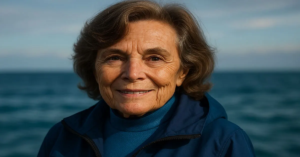
Sylvia Earle

Aboard the R/V Sylvia Earle:

She leans over the rail near Svalbard. A glacier calves – a sound like God cracking knuckles.
“This ice held ancient air bubbles. Now it’s releasing centuries of our sins.”

What the Data Doesn’t Show:

  • Inuit elder Ivaana weeping as permafrost swallows her ancestral graves
  • polar bear carcass – starved, fur hanging like old curtains
  • Sylvia’s gloved fingers tracing fresh oil slicks: “Drilling here is like setting fire to a hospital.”

Her Secret Ritual:

Each night, she fills a vial with meltwater. “Evidence,” she tells scientists. But crewmembers see her whisper to it: “Forgive us.”

V. Why Sylvia Earle Doesn’t Eat Fish (And You Shouldn’t Either)

“People say, ‘But salmon is healthy!’ So is a bullet to the head if you care about life.”

Sylvia Earle kitchen rules:

  1. Never eat anything you couldn’t kill yourself.
  2. Ask: “Did this creature die with dignity?” (Spoiler: Trawlers grant none.)
  3. If you must: Mussels cleanse water. Seaweed farms heal dead zones.
The Lobster Incident:

2018. A senator serves lobster at a conservation dinner. Sylvia pushes it away: “These are the cockroaches of the sea? No. They’re poets who mate for life. I’ll have salad.”

VI. The Unspoken Terrors: What Keeps Her Up at Night

  1. The Deep-Sea Mining Goliaths:
    Robots grinding hydrothermal vents – ecosystems older than dinosaurs – into smartphone batteries. “It’s strip-mining the cradle of life.”
  2. The High Seas Treaty Limbo:
    56 nations ratified. 4 more needed. “Delay is death for the open ocean.”
  3. The Silence:
    Hydrophones pick up fewer whale songs yearly. “They’re losing their language. Just like we’re losing our empathy.”

VII. Ordinary Miracles: Your Power to Heal the Blue

Sylvia’s secret? “Stop ‘saving the ocean.’ Start loving it.”

🍃 Become a Tidal Rebel:

  • At the supermarket: Skip shrimp (farmed in destroyed mangroves). Choose mussels.
  • In the voting booth: Demand ratification of the High Seas Treaty.
  • On your phone: #HopeSpot nominee map shows vulnerable waters near you.
🌊 Prescribe Wonder:
  • Take a child tide-pooling. Point out hermit crabs’ “shell swaps.”
  • Watch bioluminescent waves. That glow? Oxygen creation in real-time.
  • Listen to hydrophone recordings. Hear sperm whales click your name.

💙 Sylvia Earle Challenge:

  1. Spend 10 minutes daily thinking like the ocean.
  2. Ask: “Will this meal/plastic vote/purchase honor or harm my liquid mother?”
  3. Tell one person: “We breathe because the sea breathes.”

VIII. The Last Dive: What Endures When Sylvia Earle Gone

Sylvia knows her time is finite. Her legacy lives in:

  • The Hope Spot Champions: 8,000+ ordinary people guarding patches of blue.
  • The “Earle Effect”: 42% of Mission Blue volunteers are women scientists under 30.
  • The Ripple: Every plastic straw refused, every policy changed, every child who knows Phytoplankton before Pokémon.

Sylvia Earle Final Request:

“When I die, scatter my ashes where the Atlantic meets the Arctic. Then dive. Look for the shimmer. That’s me dancing with the bioluminescence. That’s you remembering: We are the ocean. And it’s not too late to come home.”

“NO BLUE, NO GREEN.
NO OCEAN, NO US.
NO EXCUSES.”

— Sylvia Earle, age 89

Sylvia Earle : Tide Turns With You

  • 🔹 Watch: Mission Blue (Netflix)
  • 🔹 Join: #HopeSpot Twitter community
  • 🔹 Act: Global ocean treaty tracker
  • 🔹 Whisper to the sea tonight: “I hear you.”

This isn’t content. It’s a lifeline thrown across generations. Grab hold.
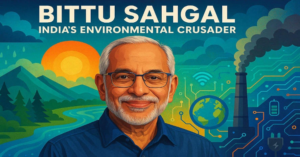
Bittu Sahgal: India’s Pioneering Environmental Journalist


🌿 The Forest’s Last Stand: Bittu Sahgal and the Art of Unbreaking India

Bittu Sahgal

🟫 Prologue: The Tiger’s Tears

Ranthambhore, 1978. Moonlight silvered the chital’s back. Beneath a banyan tree, 31-year-old Bittu Sahgal held his breath as a tigress emerged—muscles rippling like liquid gold. Her amber eyes locked onto his. Time stopped.
Then, a whimper.
Two cubs tumbled from the shadows, nuzzling her belly. As they vanished into the dhok forest, Bittu wept silently. Not for beauty alone, but for the crushing truth:

“We’re murdering this miracle for concrete.”

That night, the chartered accountant died. The warrior was born.

🌿 Bittu Sahgal and Unbreaking India

├─ Prologue: The Tiger’s Tears
│ └─ 1978 Ranthambhore, tigress and cubs, Bittu’s transformation

├─ I. Roots: When the Mountains Called
│ ├─ Childhood asthma, Shimla summers
│ ├─ Bombay greyness, bird books, Sanjay Gandhi Park
│ └─ 1975: quits CA firm over pollution

├─ II. Apprenticeship: Gurus of the Green
│ ├─ Salim Ali: listening to forests
│ ├─ Kailash Sankhala: protect rivers for tigers
│ └─ Fateh Singh Rathore: confronts Bittu’s complacency

├─ III. Ink-Stained Revolt: Birth of Sanctuary
│ ├─ 1981: Sanctuary Asia launch with ₹5,000
│ ├─ Exposes illegal sand mining; faces threats
│ └─ Radical storytelling with photos, letters, tribal voices

├─ IV. The Children’s Army
│ ├─ Kids for Tigers: teaching by showing
│ ├─ Impact: halted malls, Tiger Rangolis, forest festivals
│ └─ Saving tigers = saving ourselves (Priya’s words)

├─ V. Warriors of the Mud
│ ├─ Funding grassroots heroes (Taukeer, Laxmi)
│ └─ COCOON Conservancies: farms → forests, earning from ecology

├─ VI. The Relentless Fights
│ ├─ Koyna Dam (1994): stopped flooding forest, faced threats
│ └─ Timber Mafia (2007): undercover exposé, car firebombed

├─ VII. The Unbreakable Philosophy
│ ├─ “We are cells, not owners”
│ ├─ Development = severed arteries
│ ├─ Hope in children naming spiders
│ └─ Sacrifice: 18-year wait for holiday, honeymoon in Kanha

├─ VIII. Passing the Torch
│ ├─ Daughter Tara: editor, lessons on saving fishermen
│ └─ Current warriors: Rohit (wetlands), Lalita (plastic-free villages)

├─ Epilogue: How to Mend a World
│ ├─ 2023 Kaziranga: Bittu passes the lantern
│ └─ Legacy: citizens demand clean rivers, wildlife corridors, tiger’s roar

└─ Postscript: The Whisper in Your Ear
├─ Sparrow → Laxmi’s village
├─ Children laughing → Priya’s Rangoli
└─ Monsoon cloud → Salim Ali’s birdsong

🌱 I. Bittu Sahgal: When the Mountains Called

Young Bittu’s asthma made him an “indoor child” in 1950s Mumbai. Salvation came in Shimla’s pine-scented summers:

“Grandfather would point at deodars: ‘These trees breathe for us. Respect them.’”

But Bombay’s greyness awaited. At St. Xavier’s College, he escaped into Salim Ali’s bird books. When classmates chased stockbroker dreams, Bittu bicycled to Sanjay Gandhi National Park, sketching hornbills.

The Breaking Point: 1975. Trapped in a CA firm auditing textile mills, he watched dyes poison the Mithi River. One morning, he snapped—threw files into a monsoon gutter.

“My boss screamed, ‘Madman!’ I whispered, ‘Finally sane.’”

📚 II. Apprenticeship: Gurus of the Green

🦜 Salim Ali: The Bird Prophet

Ali taught him to listen:

“That drongo’s alarm? A leopard’s near. Forests speak if you learn their grammar.”

Together, they documented the silent collapse of Bharatpur’s wetlands.

🐅 Kailash Sankhala: Tiger’s Fury

Sankhala, smoking bidis in Ranthambhore, schooled him brutally:

“You journalists cry over dead tigers. I cry over living ones starving in fragmented forests!”

He burned into Bittu: “Protect rivers, tigers follow.”

🔥 Fateh Singh Rathore: The Scorching Truth

Ranthambhore’s legend shattered his complacency:

“You city babu! Write pretty articles while poachers eat my tigers? Go fight or jao!”

That night, Bittu vomited beside a campfire—shame and resolve churning together.

📰 III. Ink-Stained Revolt: Birth of Sanctuary

Bittu Sahgal

1981. Mumbai’s monsoon lashed his Borivali garage. With ₹5,000 (his wife’s jewelry money), a typewriter, and donated paper, Sanctuary Asia gasped to life.

First Crisis: Issue #1 exposed a politician’s illegal sand mining. A thug arrived:

“Stop or lose your fingers.”

Bittu reprinted the article with the threat verbatim. Sales soared.

✍️ The Art of Radical Storytelling

  • Headlines as Heartbeats: “She Died Protecting Your Water”
  • Photos that Haunted: A rhino calf nuzzling its poached mother’s horn-stump
  • Letters from the Wild: Fictional diary of a tiger:
    “Monsoon rains came. My cubs drank from streams your cities will poison…”

Tribal trackers became co-authors. Poachers’ confessions ran unedited. When advertisers fled, readers sent ₹10 notes wrapped in neem leaves.

🧒 IV. Bittu Sahgal : The Children’s Army

🐾 Kids for Tigers: The Quiet Revolution

2000. Delhi’s smog-choked Laxman Public School. Bittu didn’t lecture. He showed:

  • A jar of Mumbai’s brown tap water: “This flowed through tiger forests once.”
  • A tribal child’s drawing of a well: “Her village’s water returned when tigers did.”

Impact Beyond Data:

  • In Chennai, students halted mall construction near Pulicat Lake.
  • Chandrapur’s kids created “Tiger Rangolis”, triggering 167 village forest festivals.

“We’re not saving tigers,” confessed 12-year-old Priya. “We’re saving us.”


🛠️ V. Warriors of the Mud

👣 Mud on Boots: Invisible No More

Bittu’s masterstroke—funding grassroots heroes rejected by “NGO English”:

    • Taukeer Alam (Van Gujjar dropout):

“Bittu saab gave me binoculars, not pity. Now I train 73 bird guides in Uttarakhand.”

    • Laxmi Maravi (Baiga tribal woman):

“Men laughed when I joined forest patrols. Bittu published my photo. Now they ask me for jobs.”

🌳 COCOON Conservancies: Farms to Forests

Failed Maharashtra farms became living labs:

  • Yavatmal’s Resurrection: 27 acres of cotton monoculture → rewilded with 1,800 native trees → 11 revived water springs → honey/eco-tourism income.
    Bittu’s rule: “No charity. Earn from ecology.”

⚔️ VI. The Relentless Fights

💧 Battle 1: Koyna Dam (1994)

Officials planned to flood 14,000 acres of Western Ghats forest. Bittu mobilized:

  • Fishermen documented rare fish species.
  • Published secret dam memos showing seismic risks.
    Victory: Project shelved. Cost: Anonymous death threats.

🪓 Battle 2: The Timber Mafia (2007)

In Assam, he went undercover as a tea buyer. His exposé revealed:

  • Politician–logger collusion.
  • Brahmaputra floods caused by deforestation drowned 400 villages.
    Aftermath: His car was firebombed. Sanctuary’s headline:

“They Burn Truth. We Plant More.”

🧘 VII. The Unbreakable Philosophy

🧬 “We Are Not Owners, We Are Cells”

Over sweet chai in his Mumbai home, parrots quarreling on the balcony, Bittu shares his core:

    • On “Development”:

“They call highways ‘progress’. I call them arteries severed.”

    • On Hope:

“Every time a child names a spider, a forest grows in their mind.”

    • On Sacrifice:

“My wife waited 18 years for a ‘proper’ holiday. We honeymooned in Kanha—tracking pugmarks.”

🔥 VIII. Passing the Torch

🌟 Bittu Sahgal: The Next Generation

His daughter Tara, now Sanctuary’s editor, recalls:

“Papa taught me constellations during power cuts… ‘Don’t save dolphins,’ he said. ‘Save fishermen who save dolphins.’”

🌾 Bittu Sahgal : Mud on Boots Warriors Today

  • Rohit Choudhary (Assam): Sued the government for destroying wetlands. Won.
  • Lalita Devi (Rajasthan): Made 47 villages plastic-free using Bittu’s “show, don’t scold” method.

🌈 Bittu Sahgal: How to Mend a World

Kaziranga, 2023. Monsoon fog hugs elephant grass. At 76, Bittu watches a rhino calf stumble up. A young guard whispers:

“Sir, your magazine saved this park.”

Bittu smiles:
“No. You did. I just passed the lantern.”

His True Legacy:

  • Citizens who demand clean rivers like WiFi
  • Kids who see highways as wildlife corridors
  • A nation that hears the tiger’s roar as its own heartbeat

As dusk falls, a child runs up with a rhino sketch. Bittu smiles. The relay has begun.

📜 Bittu Sahgal: The Whisper in Your Ear

Next time you see:

  • A sparrow in a smoggy cityRemember Laxmi’s reforested village.
  • Children laughing in a parkThink of Priya’s Tiger Rangoli.
  • A monsoon cloudHear Salim Ali’s birdsong.

For in these fragments lives the world Bittu Sahgal refused to surrender.

Vandana Shiva: Decolonizing Agriculture Through Ecofeminism & Seed Sovereignty


The Living Earth: How Vandana Shiva Seeds of Change Are Nourishing Our Future

Picture this: a woman in a vibrant sari kneels in rich soil, her hands cradling a handful of rice seeds like precious jewels. Around her, a tapestry of life unfolds – buzzing insects, rustling leaves, the distant laughter of children. This is Vandana Shiva revolution, and it grows not from tractors or test tubes, but from the ancient wisdom of the earth itself. Her journey from quantum physics labs to the heart of India’s farmlands reveals a truth we’ve forgotten: our survival is woven into the threads of biodiversity.

The Living Earth: How Vandana Shiva Seeds of Change Are Nourishing Our Future

├── Introduction
│ └── Imagery of Vandana Shiva in the soil
│ └── Her revolution: ancient wisdom vs. industrial agriculture
│ └── Central theme: biodiversity and survival
├── When the Mountains Spoke
│ └── Childhood influences
│ ├── Father’s forest walks
│ └── Mother’s lessons from Partition
│ └── Witnessing the impacts of the Green Revolution
│ ├── Farmer suicides
│ └── Environmental degradation
├── The Seed Keepers’ Rebellion
│ └── Founding of Navdanya
│ └── Farmer response: seeds shared freely
│ └── Key Initiatives
│ ├── Seed Banks as Living Libraries
│ ├── Underground Seed Network
│ └── Women as Biodiversity Warriors

── Why Women Hold the Earth’s Memory
│ └── Ecofeminism and interconnectedness
│ └── Real-life Examples
│ ├── Neem Tree Patent Battle
│ ├── Myth of Agribusiness Feeding the World
│ └── Women’s Role in Food Sovereignty
├── Rain in the Time of Drought
│ └── Resilient farming at Navdanya
│ └── Solutions and Innovations
│ ├── Seed Freedom Festivals
│ ├── Farmer-led Seed Networks
│ └── Soil Regeneration Practices
├── The Quiet Revolution Growing Under Our Feet
│ └── Shiva’s response to critics
│ └── Living Legacy
│ ├── Indian farmers reclaiming diversity
│ ├── Seed networks expanding in Africa
│ └── Culinary revival in global cities
├── Conclusion
│ └── Mustard seed as metaphor
│ └── Core message: Diversity = Abundance
│ └── Final quote and call to awareness

When the Mountains Spoke

Shiva’s story begins where the Himalayan air tastes like pine needles and possibility. “As a child,” she recalls, “my father would take me walking through the forests, teaching me that every tree had a story, every root a purpose.” Her mother, displaced during India’s violent partition, carried a different wisdom: “She showed me how soil remembers kindness, how seeds hold memories of generations.”

These lessons became her compass when industrial agriculture’s shadow fell across Punjab – India’s breadbasket. What she witnessed would change her path forever: “Farmers who once sang to their crops were now drinking pesticides to end their lives. Rivers that nourished civilizations were poisoned. The Green Revolution wasn’t green at all – it was the colour of despair.”

Vandana Shiva: The Seed Keepers Rebellion

It started with a simple act of defiance. In 1991, Shiva founded Navdanya (“Nine Seeds”) on a scrap of land in Dehradun. Word spread among farmers: “There’s a madwoman giving away seeds for free.” What began as a whisper grew into a roar.

  • Seed Banks Like Living Libraries: Inside unassuming clay pots, over 40 community seed sanctuaries now guard thousands of varieties – rices that dance with monsoons, wheats that laugh at drought. “These aren’t just seeds,” explains farmer Kamala Devi, her fingers tracing ancient patterns on a storage jar. “They’re our ancestors’ dreams.”
  • The Underground Network: When Monsanto’s patented GMO cotton pushed farmers into debt, Navdanya’s seed savers went covert. “We’d meet at night,” chuckles elder Balaram Singh, “passing heirloom seeds like revolutionaries handing out pamphlets. Corporate seeds demand royalties. Ours ask only for care.”
  • Women’s Silent Revolution: In village after village, women became biodiversity warriors. “My grandmother taught me sixty-five ways to cook millet,” beams young activist Priya while tending a riotous kitchen garden. “Now we’re reclaiming our place as seed scientists.”

Why Women Hold the Earth’s Memory

Shiva’s genius lies in seeing what others miss: the inseparable bond between ecological destruction and the silencing of women’s wisdom. “Walk through any Indian village,” she insists, “and you’ll see it – women saving seeds in skirt hems, reading weather in birds’ flight, growing thirty crops where men plant one cash crop.”

Her ecofeminism isn’t theory – it’s survival:

  • The Neem Tree Victory: When a corporation patented the ancient neem tree, Shiva rallied grandmothers who’d used its leaves for generations. “In court, we didn’t just present documents,” she smiles, “we brought living wisdom. Those corporate lawyers didn’t stand a chance against women who spoke with the tree’s voice.”
  • The Real Hunger Games: While agribusiness boasts about “feeding the world,” Shiva’s research exposes the lie. “They measure success in grain piles, not nourishment,” she argues. “Our studies show biodiversity farms produce more nutrition per acre while healing the land.”
  • Kitchens as Labs: In Tamil Nadu, women like Lakshmi demonstrate Shiva’s vision daily. Her “useless” patch of wasteland now yields 112 food plants. “Chemicals promise big harvests but steal our children’s future,” she says, crushing fragrant herbs. “This” – she gestures at the buzzing oasis – “is real security.”

Rain in the Time of Drought

I remember standing with Shiva at Navdanya during a scorching April. While neighboring fields cracked like broken pottery, her demonstration farm breathed moisture. “See?” She plunged her hand into cool soil. “Diversity creates its own microclimate. These trees are whispering to the clouds.”

Her solutions feel like nature’s own poetry:

  • Seed Freedom Festivals: Imagine village squares exploding with colours – baskets of forgotten grains, children tasting strawberry popcorn for the first time, elders weeping at flavours that unlocked childhood memories.
  • The Underground Internet: Farmer networks sharing seeds via bicycle couriers and WhatsApp groups, bypassing corporate control. “Our connectivity predates fibre optics,” laughs Shiva.
  • Soil Not Oil: Training programs where women learn to transform barren earth into carbon-sponges using kitchen waste and patience. “They’re reversing climate change one handful at a time,” Shiva marvels.
The Quiet Revolution Growing Under Our Feet

Critics call her anti-progress. Shiva just smiles: “They think ‘scaling up’ means endless monocultures. But life doesn’t scale up – it scales out. One saved seed becomes a million. One woman’s knowledge lights a thousand minds.”

Her legacy isn’t in statistics but in living landscapes:
  • In Karnataka, farmers now proudly grow 200 rice varieties where only two remained.
  • Across Africa, women’s seed networks modeled on Navdanya are rising.
  • Even chefs in Paris and New York champion heirloom grains saved by Shiva’s movement.

As dusk falls at Navdanya, fireflies mirror the stars. Shiva picks up a single mustard seed. “This,” she whispers, “contains universes. It holds the memory of every monsoon that nourished it, every hand that saved it, every meal it will become. This is technology perfected over millennia.”

Perhaps her greatest lesson is this:
In a world obsessed with growth, true abundance lies in diversity. In an age of disconnection, revolution begins when your hands touch the earth.
As farmers across India sing while planting, “Every seed is a promise whispered to the future.”
And Vandana Shiva taught us to listen.


Elon Musk in 2025: Visionary Technocrat Shaping the Future of AI, Space & Energy

Elon Musk: The Flawed Titan Forging Our Future (Whether We Like It or Not)

Elon Musk in 2025 wearing a futuristic tech suit, standing in front of a SpaceX launchpad and Tesla factory

Look, trying to pin down Elon Musk and his impact on our planet’s future feels like trying to wrestle smoke. One minute he’s unveiling an electric truck that looks ripped from a sci-fi nightmare (and somehow works), and the next he’s tweeting something that makes your jaw hit the floor. Indeed, he builds spaceships to make us multiplanetary while his private jet crisscrosses the sky, leaving a contrail of carbon and cognitive dissonance.

This isn’t a neat story. It’s not a hero’s journey or a villain’s plot. Rather, it’s the chaotic, relentless, often infuriating saga of a single human being applying immense force to the levers of technology, trying desperately to bend our trajectory away from disaster. And love him or hate him, you can feel the tremors.

Forget “Disruptor.”  an Earthmover

Most tech CEOs talk about “changing the world” while optimizing ad clicks. Musk? He operates on a different scale. He doesn’t disrupt industries; instead, he bulldozes them and starts pouring new foundations based on brutal, beautiful physics.

Remember feeling vaguely guilty about your gas car, but thinking EVs were glorified golf carts? Then Tesla happened. It wasn’t just a car. It was a statement. Suddenly, an electric car wasn’t just acceptable; it was coveted. That shift? That gut-level desire he injected into sustainability? That’s human alchemy. He didn’t just sell cars; he sold belief – the belief that saving the planet didn’t mean sacrificing joy.

Moreover, the Superchargers? Pure genius, born of understanding human anxiety. So he didn’t lobby governments; he just built the damn network himself. It felt less like a business move, more like someone saying, “Fine, if the world won’t build the future, I will.

But It’s Not Just the Car in Your Driveway…

It’s the Powerwall humming quietly in your garage. That feeling during a storm-induced blackout when your lights stay on, powered by the sun that hit your roof yesterday. It’s independence. It’s quiet defiance against a fragile grid. Tesla Energy made “home battery” a thing people wanted, not just eco-warriors, but anyone who hated losing power.

Furthermore, it’s the Megapack banks silently displacing belching, fossil-fueled “peaker” plants. It’s knowing that when the grid strains under a heatwave, massive batteries – born from the same tech in your car – are kicking in, smooth and clean. That’s systemic change, felt in the stability of the lights staying on for millions.

The Grit Under the Shine: Factories as Cathedrals (and Battlegrounds)

Walk into Giga Berlin or Texas. The scale hits you first – a sheer, almost incomprehensible bigness. Sunlight streams through vast skylights onto factory floors buzzing with a strange ballet of humans and robots. The “Giga Press” isn’t just a machine; it’s a geological force, roaring as it stamps out a car’s underbody in one terrifying, beautiful crush of molten aluminum. Fewer parts. Less waste. Lighter weight. It’s manufacturing reimagined not just for profit, but for efficiency at planetary scale.

But you also hear the other stories. The relentless pace. The pressure cooker environment. The arguments over safety, over unions. This is the human friction point. Can you build a sustainable future sustainably for the people building it? That tension hangs thick in the air, unresolved. Indeed, it’s a stark reminder: the path forward isn’t clean or easy. It demands sweat, sacrifice, and constant, uncomfortable negotiation about what kind of future we’re willing to build.

Beyond Earth: Rockets, Tunnels, and the Existential Itch

Elon Musk in 2025 wearing a futuristic tech suit, standing in front of a SpaceX launchpad and Tesla factory

Then there’s SpaceX. The sheer, heart-stopping spectacle of a rocket booster screaming back to Earth and landing perfectly upright never gets old. It feels… impossible. And yet, there it is. That reusability? It’s not just cool tech; it’s a fundamental rejection of waste.

Also, those thousands of Starlink satellites? Yes, astronomers curse them. And crucially, they, and constellations they enabled, are our planet’s new nervous system. They track deforestation in real-time, pinpoint methane leaks (that invisible climate killer), and measure sea-level rise with terrifying precision. That data is our lifeline – the unflinching truth we need to fight the climate fight. Musk made getting that truth cheaper. That matters.

Regarding the Mars thing? Look, it sounds bonkers. But scratch the surface, and it’s driven by a raw, human fear: putting all our eggs in one fragile basket. Building a backup. The technologies needed for a self-sustaining Mars colony – closed-loop air, water, food, energy – are the exact technologies we desperately need to master here to live sustainably. It forces us to think in cycles, not lines. It’s ambition turned into a forcing function for Earth-bound sustainability. Crazy? Maybe. But it makes you think differently about our place in the universe.

Elon Musk Glaring Contradictions (That Sting)

Let’s not look away:

  1. The Jet: This one hurts. Seeing that sleek Gulfstream track constantly on flight radar, knowing the carbon pouring out… it feels like a betrayal. Offsets? Feels like paying for indulgences. It undermines everything. It whispers, “Rules for thee, not for me.” It’s the biggest stain on his climate leadership.
  2. The Mining Shadow: Our clean, electric future is built on lithium, cobalt, nickel. Digging that stuff up scars landscapes, drains water, and sometimes involves human suffering. Tesla pushes hard on recycling and ethical sourcing – it’s a core obsession – but the sheer volume he demands creates immense pressure. It’s the dirty secret under the shiny car. Can we truly call it sustainable if the birth pangs are so brutal? This question haunts the entire industry.
  3. The Human Cost: The stories of burnout, of safety near-misses, of union busting… they paint a picture of a future built at a terrifying human pace. Is the speed worth the toll? Does the engineer’s relentless drive crush the very people making it happen? Sustainability has to include human dignity. Full stop.
  4. The Rollercoaster: The whiplash! One day he’s saving the world, the next he’s tanking a stock or picking a bizarre fight. That volatility breeds distrust. Can we rely on this chaotic force for the decades-long, steady collaboration the climate crisis demands? It’s a valid, gnawing fear.
So… Where Does That Leave Us?

Honestly? Wrestling with it.

  • He Accelerated Time: He shoved EVs, solar roofs, and grid batteries from niche dreams into mainstream reality years faster than anyone thought possible. That’s not hype; it’s asphalt on the ground and panels on roofs. Millions of tons of carbon aren’t in the atmosphere because of it. That’s real.
  • He Made Physics Sexy: He inspired a generation of engineers and entrepreneurs to think bigger, bolder, and fundamentally. To ask “What are the atoms doing?” not just “What’s the next feature?” That shift in mindset is invaluable.
  • He Forced the Issue: Car companies, energy giants – they had to respond. He didn’t ask permission; he built the future and dared them to catch up. That competitive fire pushed everyone.
  • He Embraced the System: He saw the connections – cars need clean energy, clean energy needs storage, monitoring the planet needs cheap space access. He didn’t just build products; he tried (messily) to build ecosystems.

Elon Musk But…

  • He’s Not a Messiah: Governments must set the rules. Scientists must do the deep R&D. Communities must have a voice. Workers must have rights. He’s one powerful, chaotic engine in a vast machine.
  • Scale Has Teeth: Gigantic ambitions create gigantic problems – resource wars, supply chain chaos, the sheer difficulty of managing such velocity without breaking things (or people). Speed isn’t free.
  • Sustainability is a Feeling, Not Just Tech: True sustainability feels just. It feels fair. It feels secure not just for the privileged, but for everyone. It respects the planet and the people on it. That requires heart, empathy, and collaboration – things not always evident in the relentless engineering grind.

Elon Musk Raw Truth: Imperfect Fire

Elon Musk isn’t building us a gleaming, perfect utopia. He’s a flawed, brilliant, exhausting, contradictory force of nature, swinging a sledgehammer at the walls of what we thought was possible. He’s pouring immense human capital, genius, and capital into forging tangible tools for survival: better batteries, smarter grids, reusable rockets, electric everything.

It’s messy. It’s often ugly. It’s fraught with ethical landmines and personal hypocrisy. He infuriates as much as he inspires.

But feel the ground shake. The cost of batteries plummeted. Electric cars are normal. Massive batteries are stabilizing grids powered by sun and wind. Rockets do land themselves, slashing the cost of watching our fragile planet.

He hasn’t solved it. Not by a long shot. The path ahead is brutal, uncertain, and demands so much more than technology alone. But he grabbed the wheel of history and yanked it hard towards a future that might just work. He made the impossible feel… probable. Maybe even inevitable.

His legacy on sustainability won’t be a statue. It’ll be the hum of the electric motor in your driveway, the resilience of your lights staying on during a storm, the data from space helping us understand our wounded planet, and the restless, uncomfortable feeling that we have to move faster.

He’s the flawed titan, covered in the soot and sparks of progress, hammering relentlessly at the future. And like it or not, that future is being shaped by every blow he lands. The question isn’t really about him anymore. It’s about what we do with the tools, the urgency, and the messy, complicated momentum he’s unleashed. The fire is lit. Now it’s up to us not to get burned, but to build something lasting from the heat.

Greta Thunberg: The Voice of a Generation Driving Global Climate Action

The Girl Who Refused to Stand Up: How Greta Thunberg Taught Us to Listen to the Uncomfortable Truth

Greta Thunberg, climate activist speaking at a rally

The Day the World Changed (Though Nobody Noticed Yet)

Rain slicked the Stockholm pavement that August morning in 2018. Greta Thunberg—all 15 years and 80 pounds of her—sat hunched under a too-thin jacket, her hand-painted “Skolstrejk för klimatet” sign propped against bony knees. Office workers hurried past, barely glancing at the slight figure who should’ve been in math class.

You know that moment when you’re so tired of waiting for adults to do something that you just… sit down? That’s where it began for Greta. Not with a roar, but with a quiet thud—a backpack hitting the pavement outside Sweden’s parliament on a drizzly August morning in 2018. She was 15. Her sign, hand-painted with “Skolstrejk för klimatet” (“School Strike for Climate”), wobbled against her knees. Passersby glanced. Some shrugged. Just another kid, they probably thought.

Her parents certainly did. “Go to school,” they’d urged. But Greta had stopped eating months earlier, haunted by climate reports she’d read at age 8. The numbers didn’t add up: How could the world be ending, and everyone just… carry on? Diagnosed with Asperger’s and OCD, she later called it her “superpower”: “I see the world in black and white. And when it comes to survival, there are no grey areas.”

What they didn’t see:

  • The uneaten sandwich in her backpack (climate anxiety had stolen her appetite for months)
  • The tremor in her hands as she arranged flyers (OCD made precision a compulsion)
  • The relief flooding her when nobody yelled—just ignored her, like adults ignored melting glaciers

Her opera-singer mother Malena had begged: “Greta, this isn’t your battle.”
Her actor father Svante warned: “You’ll get in trouble.”
But Greta’s Asperger’s brain couldn’t unsee the numbers: 420 gigatons left in our carbon budget. 42.5 gigatons emitted yearly. Do the math.

“I either do this,” she told them quietly, “or I disappear inside my sadness forever.”

The Making of an Accidental Revolutionary

Greta Thunberg, climate activist speaking at a rally

Before the braids became iconic, Greta was just an 8-year-old weeping over polar bear documentaries. By 11, the dissonance between climate science and adult inaction literally starved her:

  • Stopped speaking for months (selective mutism)
  • Shrank to 68 lbs (OCD rituals around food)
  • Couldn’t sleep unless her parents turned off all lights (energy guilt)

Greta Thunberg kitchen became a war room:

Scene: 2016
Greta slams IPCC reports on the table: “You’re stealing my future.”
Malena sighs: “Sweetheart, we recycle—”
“Recycling won’t reverse permafrost melt! Look!” She stabs at methane emission charts.

Two years later:

  • No more flights (Malena’s opera career ends)
  • Vegan meals only (Greta studies soybean carbon footprints)
  • Lights off by 8 PM (family reads by headlamps)

“Was it hard?” a reporter later asked.
Svante smiled tiredly: “Watching your child fade away is harder.”

How a Whisper Became a Roar

The miracle wasn’t Greta striking—it was who saw her first:

  1. Isabella (15, Melbourne): “Shared her post during boring chemistry. Thought: If she can sit alone, our whole class can skip.”
  2. Felix (17, Berlin): Printed 500 “Fridays For Future” flyers after seeing Greta’s tweet
  3. Luisa (74, Stockholm): Brought thermoses of soup every Friday, whispering: “My generation failed you.”

By Week 3, photographers circled Greta like seabirds. She hid behind her sign, texting her sister: “Too many eyes. Hurts.”

The viral moment nobody predicted:

A Finnish banker tweeted: “This kid’s braver than our parliament.”

Overnight impact:
  • 200k retweets
  • 47k new #FridaysForFuture posts
  • 1 shy teen drowning in interview requests

“Do you have media training?” a BBC host asked.
Greta’s flat stare said everything: “I have science.”

The Human Behind the Headlines

For every iconic speech, there were private struggles:

  • Before Davos 2019: Panic attack in train bathroom. Svante rubbed her back humming ABBA
  • After “How Dare You” UN speech: She vomited from overstimulation, then slept 14 hours
  • Meeting Obama: “He was nice. But I kept thinking: Your policies approved Arctic drilling.”

Her superpower? Radical honesty:

  • To Merkel: “Climate laws ≠ real action”
  • To reporters: “Don’t praise me. Praise the Marshall Islands kids drowning in your emissions”
  • To fans: “I’m not your hope. I’m your panic attack”

And her quiet kindness:

  • At a London rally, she spotted an autistic girl rocking in distress. Took her behind the stage, shared noise-canceling headphones
  • When trolls mocked her braids? She donated hair to cancer kids

The Real Ripple Effect

That first week, she sat alone. A security guard brought her thermos of soup. A journalist snapped a photo. Then something cracked open.

Teens in Germany saw her Instagram post. Kids in Australia shared it. By week three, a handful joined her. By September, hundreds across Europe were ditching class on Fridays. Greta seemed baffled: “I shouldn’t be here. I should be back in school, across the ocean.” But there she was—a reluctant icon in worn sneakers, her braids tucked under a beanie.

Beyond the 4 million strikers:

  1. In Lagos: 12-year-old Chidi started “Clean-Up Club” after seeing Greta’s TED Talk. Now 300 members strong.
  2. In Santiago: Elderly women knit scarves for strikers with “Gracias Greta” tags
  3. In Montana: Conservative rancher Jim switched to solar: “If that girl sailed an ocean to yell at politicians, I can damn well install panels.”

The invisible shift: Climate grief became legitimate. Therapists now recognize “pre-traumatic stress” in Gen Z.

Why Greta Thunberg Still Sits Down (Even When It Hurts)

2023: Lützerath, Germany
Greta sits in coal mine mud, rain plastering hair to her face. Riot police loom.

Journalist: “Why risk arrest?”
Greta: “The real crime is down there.” She points at excavators tearing up ancestral farmland for lignite.

  • She’s been: Dragged away by German police (twice)
  • Fined £1000 for blocking UK oil terminals
  • Banned from Russian entry after condemning Ukraine invasion

“I hate conflict,” she admits. “But silence is violence now.”

What We Learned From the Girl Who Wouldn’t Move

  1. Small > Loud: Her strike started with one ask: Sweden align with Paris Agreement
  2. Authenticity Trumps Polish: “I don’t do ‘hopeful’. I do ‘here’s the data’.”
  3. Vulnerability is Strength: Sharing her autism/OCD made millions feel seen
  4. Systems > Straws: She never shamed individuals. “Focus on the 100 companies causing 71% of emissions.”

Greta Thunberg Quiet Aftermath

Today, at 21:

  • She studies ecology online between protests
  • Still lives with parents (avoids flights = can’t tour universities)
  • Date nights? “Hiking. With reusable water bottles.”

Her greatest fear?
“Not that we fail. That people will say: ‘Greta tried’ while coasting toward collapse.”

Her stubborn hope?

Pointing at Chilean teens who forced a green constitution.
“They didn’t need me. They saw what power they had.”

“People ask: ‘Did you change the world?’ No. I sat down. The world saw its own reflection in my sign—and flinched.”
Greta Thunberg, 2024

Today, at 22, Greta’s still restless. She studies maps not of college campuses, but oil pipelines. She knows the movement’s messy. “Some Fridays, 10 people show up. That’s okay,” she says.

Her real legacy? Making “climate” human. Before Greta, it was graphs and doom-scrolling. Now, it’s:

A 12-year-old in Kenya planting trees because “Greta did something.”

Grandparents writing to her: “You woke me up.”

That knot in your stomach when you skip a plastic bag—because someone sat down in the rain and refused to move.

“People keep asking: ‘What’s your hope?’ I don’t want your hope. I want you to panic. Then act.”
— Greta Thunberg, 2019

Sometimes changing the world begins with a backpack, a sign, and the stubborn refusal to stand up.

Greta Thunberg Final Truth:

This isn’t a superhero story. It’s about a girl whose body trembled but whose conscience wouldn’t. Who still cries before speeches. Whose greatest legacy might be making millions ask: “If she can sit in the rain for my future… what’s my excuse for standing still?”

The fire she lit? It wasn’t in parliaments. It was in the human heart—that stubborn, inconvenient place where hope outlives reason.

AI Gore’s Trauma: Mental Health & Legal Perils of Synthetic Violence

The Fire Inside: Al Gore Unflinching Humanity in the Climate Fight


The Tennessee air hangs thick with honeysuckle and memory. At his family farm near Carthage, 77-year-old AI Gore walks the same fields he plowed as a boy, his hand brushing against stalks of corn taller than he remembers. “Soil remembers,” he murmurs to an old oak. “We’re just borrowing this.” This isn’t the polished orator of global summits. This is Albert Gore Jr.son, father, grandfather—whose lifelong battle for the planet began not in boardrooms, but in the quiet ache of watching bulldozers strip hillsides bare after his father lost a Senate race.

The Wounds That Forged a Warrior

Gore’s resolve wasn’t born in congressional halls. It was forged in private grief:

  • Tobacco’s Shadow: Losing his beloved sister Nancy to lung cancer at 45. “Big Tobacco lied to Congress,” he recalls, voice tightening. “Watching her gasp for breath… that’s when I learned corporations could kill.”
  • Political Heartbreak: The gut-punch of 2000 wasn’t just losing an election. “For weeks, Tipper found me staring at frozen creeks,” he admits. “I’d failed the climate and democracy.”
  • Nature’s Whisper: His darkest moment came hiking the Appalachian Trail in 2001. “I almost quit. Then I saw a scarlet tanager—a bird my dad loved. It felt like… permission.”

These scars fuel his urgency. When critics mock his “doomsaying,” they miss the man who still chokes up recalling polar bears in An Inconvenient Truth. “People called it manipulation,” he sighs. “But I cried editing that scene. Because we did that.”

The Awkward Truth: AI Gore as Human, Not Hero

He knows the caricature: Saint Al, the wooden prophet. So he leans into his flaws with disarming candor:

  • “I Suck at Small Talk”: At a 2023 Climate Reality training, he fumbled introducing himself to teens. “Just call me Al. Or ‘that guy from the movie.’” Laughter broke the ice.
  • Tech Glitches Galore: His team dreads his PowerPoint experiments. “Remember Oslo?” an aide groans. “The Nobel speech with upside-down icebergs!” Gore grins: “Keeps us humble.”
  • Dad Jokes & Grief: After his divorce, he’d lighten Zoom calls with terrible puns. “What’s a glacier’s favorite soda? Ice Mountain Dew!” Then he’d pause. “Seriously though—we’re losing them.”

This vulnerability disarms skeptics. When a young activist confronted him in 2022 (“Your carbon footprint!”), Gore didn’t deflect. He pulled up real-time data: solar-powered homes, electric vehicles, offsets for flights. “I’m not perfect. But I’m trying. Are you?”

Kitchen Tables & Climate Solutions: The Unseen Work

Beyond the spotlight, Gore’s genius lives in quiet moments:

  • Midnight Mentoring: He texts Climate Reality leaders before big fights. To María in Chile facing copper miners: “Truth is your pickaxe. Swing hard.”
  • The “Gore Glare” Strategy: Corporate CEOs wilt under his silent stare. After Exxon’s board refused a meeting, he appeared unannounced at their cafeteria. “Your grandchildren deserve better,” he said, sliding climate data across the table. They met the next week.
  • Grief Circles: After wildfires, he hosts survivors at his farm. No speeches. Just listening. “Hugging a woman who lost her home… that’s what fuels me,” he tells staff.

The Human Toolkit

Tactic When Used Impact
Vulnerability Facing youth activists Builds trust; disarms hostility
Relentless Listening Frontline communities Shapes Climate TRACE priorities
Dad Humor Tense negotiations Releases pressure; builds rapport
Silent Stare Corporate greenwashers Creates accountability without words

The Unbreakable Thread: Family as Compass

Gore’s true north isn’t data—it’s his 8 grandchildren.

  • Bedtime Science: He turns marshmallow roasts into climate lessons. “See the CO2 bubbles? Like Earth’s blanket!”
  • Legacy Fears: Holding newborn Grace in 2023, he wept. “Will she ask why I didn’t scream louder?”
  • Tipper’s Shadow: Though divorced, they co-parent the planet. Her photos of melting glaciers still guide his speeches. “She sees beauty in the battle,” he says.

This intimacy shapes his mission. Climate TRACE’s landfill sensors? Inspired by his grandson’s asthma near a Memphis dump. His fiery defense of democracy? “Because Maxine deserves to vote,” he says of his 12-year-old granddaughter.

Stumbling Forward: The Grace in Getting It Wrong
  • Overreach Apology: When An Inconvenient Truth overstated Arctic melt timelines, he publicly thanked critics. “Science corrects. So must we.”
  • Justice Awakening: Early Climate Reality trainings centered white voices. After BLM protests, he overhauled programs, hiring frontline leaders as trainers. “I was late,” he admits.
  • Profit Accusations: When attacked for Generation’s success, he released tax records showing 100% climate donations. “Money funds the fight,” he shrugs. “But integrity is the fight.”

His harshest critics disarmed by his candor. Even climate denier Marc Morano concedes: “Al owns his stumbles. Wish my side did.”

AI Gore Unseen Toll: A Warrior’s Weariness

  • Sleepless in San Francisco: Staff find him drafting speeches at 3 AM, glasses askew. “Dreamt of drowning cities,” he mutters.
  • Body’s Rebellion: Arthritis makes shaking 1,000 hands agony. “Pop an Advil,” he grits. “They came to see hope.”
  • Solace in Song: Alone on planes, he listens to Patsy Cline. “Crazy… for feeling so lonely.”

Yet he persists. Why? “Ran into a kid last week,” he smiles. “Said my movie made her a scientist. That’s the antidote.”

AI Gore: Fireflies & the Unfinished Fight – July 4, 2025

At the farm, Gore watches grandchildren chase fireflies—their laughter echoing his own childhood summers. Inside, draft speeches litter the table. One line stands circled: “Democracy isn’t a monument. It’s a garden—tended daily or lost.”

He steps onto the porch, feeling the humid kiss of a changing climate. The fireflies flicker like dying stars. “They’re vanishing,” his granddaughter whispers. Gore pulls her close. “Then we fight harder.”

In this quiet, you see the man behind the movement:

  • Not a saint, but a stubborn Southern boy who still believes in decency
  • Not a prophet, but a grandfather trembling for tomorrow
  • Not a politician, but a gardener tending hope in broken soil

As fireworks color the valley red, white, and blue, he whispers words that anchor his humanity:

“We don’t need perfect heroes. We need imperfect people who refuse to quit. Who plant trees whose shade they’ll never feel. Who fight because giving up is a luxury love can’t afford.”

The fireflies blink on. So does he.

Wangari Maathai: Nobel Laureate, Environmental Icon & Women’s Rights Pioneer


The Woman Who Planted Freedom: Wangari Maathai Forest of Resistance

Nyeri, Kenya • April 1977
Rain slicked the red clay as Wangari Maathai knelt, pressing a *mubiru* seedling into the earth. Around her, women from the National Council of Women watched, skepticism in their folded arms. “How will trees feed my children?” asked a grandmother with eyes like cracked pottery. Wangari’s hands stilled on the sapling’s stem:

“This fig will hold your soil when rains come. Its leaves will shade your beans. And when you sell its fruit…” She placed a coin in the woman’s palm. “…you’ll buy medicine for that cough.”

For Wangari, trees were never just trees. They were living libraries of ancestral wisdom, women’s banks in a patriarchal society, and quiet soldiers against dictators. By her death in 2011, she’d mobilized women to plant *over 51 million trees* – and became the first African woman to win the Nobel Peace Prize. This is how a Kikuyu girl became “Mama Miti” (Mother of Trees) and taught the world that ecology is the deepest form of justice.

Roots: The Girl Who Spoke to Soil (1940s)

Young Wangarĩ Muta’s world smelled of woodsmoke and wet ferns in Ihithe village. Her grandmother’s voice wove through the dark:

“See that fig? Its roots hold underground rivers. Break it, and the springs die.”

British colonists saw forests differently – as timber piles. Wangari watched white settlers clear sacred groves for tea plantations, unmoved when landslides buried Kikuyu farms. “Their machines sounded like monsters eating the earth,” she’d recall. At 8, she secretly replanted wild orchids uprooted by soldiers – her first act of ecological resistance.

The Kennedy Airlift: An Education in Irony (1960)

At 20, Wangari boarded a propeller plane to America – part of the “Kennedy Airlift” granting Africans Western education. In Kansas, biology labs dazzled her. But in Pittsburgh, she saw rust-belt rivers choked with sludge.

“You cleaned this?” she asked locals restoring the Monongahela.
“Took 20,000 of us suing factories,” they shrugged.

The lesson seared her: Environmentalism requires democracy. Yet back in Nairobi, her doctorate in anatomy meant nothing.

  • Job rejection: “Men won’t take orders from a woman professor.”
  • Marital ultimatum: Husband demanded she quit activism: “Choose: family or trees.”
  • Courtroom humiliation: A judge called her “too educated, too difficult, too un-Kenyan” during divorce proceedings.

Alone with three children, she sold corn by the roadside. At night, she studied satellite maps showing Kenya’s vanishing forests – 12,000 hectares lost yearly.

The Birth of Green Belt: Aprons as Armor (1977)

Drought shriveled the land in 1977. Rural women walked Wangari through their dying world:

  • Rivers once deep enough to baptize in, now dust trails
  • Fields stripped naked by erosion
  • Children listless from malnutrition

“Why come to me?” Wangari asked.
“You’re the one who went to America,” they said. “Bring back a solution.”

She handed out seedlings of native fig and acacia.
“This is your ‘America.’ Plant it.”

The Green Belt Movement was born with radical rules:

  1. Women-run nurseries: “You know the land’s pain better than any expert.”
  2. Payment per surviving tree: 4 Kenyan shillings (enough for schoolbooks or aspirin)
  3. Ecological literacy: Taught under acacia trees using Kikuyu parables

Government officials mocked: “Women gardening won’t fix poverty.”
Wangari shot back: “Neither will your Swiss bank accounts.”

Uhuru Park: When Mothers Stood Against Bulldozers (1989)

President Daniel arap Moi planned a 60-story monstrosity in Nairobi’s last green lung – Uhuru Park. Wangari wrote to foreign investors:

“This tower will cast literal and metaphorical darkness over Kenya.”

Retaliation was swift:

  • Police whippings: Batons split her scalp open during a park sit-in
  • Media smears: State radio called her “a witch who bewitches women”
  • Night terror: Thugs broke into her home screaming, “We’ll bury you where we bury dogs!”

Undeterred, she mobilized grandmothers to camp in the park. They sang Kikuyu lullabies as bulldozers revved:

“Mũkũyũ, mũkũyũ (Fig tree, fig tree)
Your roots are deeper than their greed…”

When international funders withdrew, the project died. Wangari hugged weeping women under the fig trees they’d saved. “This,” she whispered, “is what democracy smells like – wet soil and sweat.”

Sacred Groves & Cell Blocks: The Anatomy of Resistance

Karura Forest War (1999)

Moi’s cronies planned luxury homes in ancient Karura woods. Wangari led protesters into the forest.
That day:

  • Youths wielding machetes slashed her cheek open
  • Nuns locked arms around fig saplings
  • Clerics held Bibles aloft as tear gas canisters fell

Her journal entry: “Blood on my shirt, soil in my nails. We planted 7,000 seedlings where they beat us.”

Prison Botany

Jailed for “treason,” Wangari turned her cell into a nursery:

  • Smuggled seeds: Hidden in Bible pages
  • “Rainwater harvesting”: Using her rice bowl
  • Guerrilla planting: Tucking seedlings into cracks in the prison yard

“Every tree,” she told inmates, “is a flag of freedom no one can tear down.”

Wangari Maathai: Dancing in Banana Silk (2004)

October 8, 2004. Wangari was digging terraces when a reporter stumbled through the brush: “You’ve won the Nobel Peace Prize!”

In Oslo, she wore gowns spun from banana fiber and Luo reed necklaces. Her speech redefined peace:

“We plant because war begins where resources end. These trees are trenches dug for life.”

Back home, women danced with seedlings balanced on their heads. “They used to call us ignorant peasants,” one laughed. “Now we’re Nobel gardeners!”

The Unseen Wangari Maathai: Rituals & Vulnerabilities

  • Morning practice: Sipped chai while watching geckos hunt moths – “My daily meditation on balance”
  • Guilty pleasure: American crime novels (“After battling dictators, I deserve Sherlock Holmes!”)
  • Secret fear: “What if we’re too late?” she whispered to her daughter during cancer treatments
  • Sacred ritual: Washed her face with dew from fig leaves before protests

Her greatest grief? “That my ex-husband lived to see me win the Nobel… but never apologized.”

The Forest After the Planter (2011-Present)

Seeds Still Rising
  • Wanjira Mathai (daughter) leads the movement, expanding to 30 African nations
  • Urban “Seed Balls”: Schoolchildren wrap native seeds in charcoal dust, bombarding vacant lots
  • Digital Forests: Apps track community tree counts – 620,000+ planted monthly

Wangari Maathai Living Syllabus

Lesson Real-World Ripple
“Women’s hands heal earth” ➔ Kenya’s 2017 constitution guarantees women land ownership
“Plastic bags are colonialism’s ghost” ➔ Africa’s strictest plastic ban passed in Kenya (2017)
“Trees are peace treaties” ➔ “Forest Corridors” now bridge ethnic conflict zones

The Quiet Revolution: How Wangari Maathai Legacy Grows

In a Nairobi slum, 14-year-old Aisha tends neem trees piercing concrete:

“Mama Maathai said trees breathe hope. So I breathe with them.”

In Liberia’s postwar fields, women plant “Peace Palms” using Wangari’s nursery model.

At COP28, Kenyan delegates hand fig saplings to oil executives: “Plant this instead of drilling.”

Wangari’s true monument? The ordinary courage she seeded:

  • A Maasai grandmother suing miners polluting her river
  • Schoolgirls demanding climate curriculum
  • Prisoners growing food forests behind bars

Wangari Maathai: The Fig That Outlived the Planter

September 25, 2011. Wangari’s coffin – woven from papyrus reeds and olive branches – lowered into earth she’d fought to save. Today, a fig tree grows from her grave, its branches sheltering:

  • Women signing land deeds
  • Children painting seedlings on protest signs
  • Activists plotting their next “guerrilla gardening” raid

Wind rustles the leaves. Some swear it whispers:

“Until the soil is free, keep planting.”

Plant Wangari Maathai Legacy:

  • 🌱 Support: greenbeltmovement.org
  • 📚 Read: Unbowed (her raw, poetic memoir)
  • Act: Join “Seed Bomb Saturdays” in your city

“You cannot enslave a mind that knows itself.
You cannot uproot a people who plant their dreams.
We are the soil. We are the rain.
We are the forest waking.”

— Wangari Maathai’s final journal entry

David Attenborough: The Voice of Nature | Legacy, Documentaries & Climate Impact

The Man Who Whispers to the World

David Attenborough and the Art of Paying Attention

David Attenborough speaking against a backdrop of wildlife and climate change imagery

Rain hammers the tin roof of a Borneo longhouse. 1976.
Young David Attenborough sits cross-legged on rattan mats, sweat soaking his collar. An Iban tribesman passes him fermented rice wine in a coconut shell. Outside, gibbons sing the forest awake.
“They say the hornbill carries messages between worlds,” the elder murmurs, tracing bird wings in the firelight.
David leans closer. Not as a scientist. Not as a broadcaster.
As a storyteller hungry for truth.

This is who he is:
A 97-year-old man who still gasps when a damselfly lands on his notebook.
Who cries watching archival footage of glaciers he once stood upon.
Who whispers “astonishing” over a worm’s iridescent skin.

David Attenborough in the Limestone Cathedral (Leicester, 1937)

Young David’s sanctuary wasn’t his bedroom – it was a quarry.
The smell: Wet stone and crushed ferns.
The treasure: Trilobites fossilized in slate like pressed flowers.

“Split the rock,” his father taught, “and time collapses.”
One rainy Tuesday, 11-year-old David pried open a slab. Inside: the coiled shell of an ammonite – unseen for 150 million years.
He pressed his palm against its spiral.
Cold. Ancient. Alive.

At dinner, brother Richard (future actor) reenacted Shakespeare. David slid the fossil onto the tablecloth:
“This creature swam when dinosaurs were hatchlings.”
His mother sighed, “Must it live next to the gravy boat?”

 The Accidental Broadcaster (BBC Studios, 1952)

Teeth. That’s why radio rejected him.
“Your sibilants whistle,” they said. “And your incisors… distract.”
Television hired him as a “trainee producer” – a role requiring zero on-camera presence.

Then: The Freddie Incident.
1953. Live broadcast. A chimpanzee named Freddie:
– Ate the chrysanthemum decorations
– Bit the director’s ankle
– Escaped into the makeup room

Panic. Static. Then… David’s voice, calm as Sunday breakfast:
“Well… Freddie seems to prefer Revlon’s ‘Cherries in the Snow’ lipstick. Can’t say I blame him.”
The switchboard lit up. “Who WAS that man?”

When Grief Became His Compass (London, 1997)

Jane’s cancer was swift. Forty-seven years of marriage ended in a hospice room smelling of lilies and antiseptic.

For months, David wandered Kew Gardens at dawn. “I’d watch spiders mend webs,” he told a friend. “Life insisting on itself.”

Then came the birds-of-paradise project. In New Guinea, he filmed a male Sicklebill – obsidian feathers catching the sun like oil slicks.
“Jane,” he breathed into his field notes.
Later, he confessed: “I needed her to see that iridescence. So I named it for her.”

The Attenborough Method: Slow Magic

1. The 90-Second Rule
The Blue Planet, 2001. A sperm whale carcass sinks through twilight.
No music. No narration. Just bubbles rising from bone.
“Hold it,” David insisted as producers fidgeted. “Let them feel the descent.”
Viewer mail: “I wept for a whale I never knew existed.”

2. The “Sideways Glance”
Madagascar, 2008. Crew filming lemurs.
David’s head swivels. “Look! The chameleon!”
A lizard’s tongue snaps a moth mid-air.
Director: “But David, we’re on lemurs–”
“THIS is the story,” he whispers. “Precision. Hunger. Grace.”

3. The Hummingbird Epiphany
His 90th birthday present to himself? High-speed cameras.
“Watch!” He grabs your sleeve like an excited boy. “Their wings draw infinity symbols in the air. Infinity!”

Kitchen Table Wisdom (David Attenborough Home, Richmond, 2023)

David Attenborough speaking against a backdrop of wildlife and climate change imagery

Morning ritual:
1. Feeds robins (“Robert” and “Roberta”)
2. Drinks Assam tea from a chipped “World’s Greatest Grandpa” mug
3. Reads Journal of Myrmecology (ant studies)

His confession:
“I talk to earthworms while gardening. Apologize when moving them.”

On modern nature films:
“Too much *dun-dun-DUN!* music. As if a wren building a nest is a car chase.”

 The Day He Changed His Mind (Galápagos, 2005)

For decades, he avoided activism. “Not the BBC’s role.”
Then he met Lonesome George – last Pinta Island tortoise.

The creature’s eyes held millennia of solitude.
“Like staring into a dying galaxy,” David murmured.

That night, he wrote in his journal:
“We broke the world.
Now we must mend it.”

His next film: Climate Change – The Facts. Unflinching. Urgent.
Colleagues worried: “You’ll lose audiences.”
He gained 500 million viewers.

Small Moments That Moved Mountains

The Plastic Straw Revolt
After Blue Planet II showed albatrosses feeding plastic to chicks:
– A 9-year-old girl confronted her MP: “Sir David says stop!”
– Starbucks banned plastic straws within 18 months.

The Letter to Maya
2019. A child’s crayon drawing: orangutans crying over chopped trees.
His reply:
“Dearest Maya,
Tell your class this: When you breathe in, thank a tree.
When you drink, thank a cloud.
You belong to them as they belong to you.
– David”

Maya’s current project: 12,000 kids planting Indonesian rainforest.

Vulnerabilities: The Unedited Takes

  • Imposter Syndrome: “I never studied biology! Just… looked.”
  • Guilt: “My early films showed ‘untouched’ wilderness. But we’d already broken it.”
  • Fear: “Will wonder be enough to save us?”

His coping mechanism? Naming things.
– A three-legged fox in his garden: “Hopkins”
– A star-nosed mole in Planet Earth II: “Sir Digby”
“If you name them,” he says, “you can’t ignore their fate.”

At 97: Still Curious

Glastonbury Festival, 2023
He crowd-surfed (in a wheelchair). Got a temporary tattoo: for extinct species.
“Best mosh pit ever!” he beamed.

Papua New Guinea, 2024
Filming tree kangaroos. Heatstroke hit. Crew begged him to rest.
“Nonsense!” He sipped water, adjusted his hat. “That joey hasn’t learned to jump yet. I want to see her try.”

Why We Still Listen

“He doesn’t perform awe,” says director Sara Ford. “He is awe.”

His secret? Treating viewers as co-discoverers, not students.
– When he whispers “Shh… watch this,” 500 million hearts still.
– When he murmurs “We have a problem,” schools change curricula.

“We’re not saving ‘the planet,’” he insists. “We’re saving our home. Our only shot at wonder.”

David Attenborough Last Frame: The Garden Bench

Richmond, twilight.
David watches a thrush crack a snail on a stone.
“Clever girl,” he murmurs.
A neighbour calls over the fence: “Everything alright, Sir David?”
He smiles. “Everything’s astonishing.”
Above him, Venus pulses in a lavender sky.
The camera holds.
The thrush sings.
The world breathes.


“People protect what they love.
They love what they understand.
They understand what they’re taught to see.”

– Attenborough’s Unwritten Law


Jane Goodall in Gombe: A Vision of Hope

The Girl Who Listened to Earthworms

Dr. Jane Goodall sitting in Tanzania’s Gombe rainforest, observing wild chimpanzees at golden hour

Rain drummed a secret rhythm on the tin roof of the henhouse. Four-year-old Jane Goodall pressed her palms into the cool, damp earth, holding her breath as straw pricked her knees. The speckled hen clucked nervously. “Just one more minute,” Jane willed silently, her small body coiled in anticipation. When the egg finally dropped into the nest, she scrambled home, cradling the warm treasure. Mud streaked her dress like war paint. Straw clung to her curls. Her mother Vanne didn’t scold. She knelt, brushing dirt from Jane’s cheek. “How did you wait so long, my darling?” she whispered.
That moment became Jane’s soul-deep compass:

  • Patience: Learning stillness as the wary hen returned.
  • Curiosity: Sketching earthworms in rain-soaked notebooks as bombs fell on wartime Bournemouth.
  • Empathy: Vanne’s quiet nod when Jane declared, “Animals have feelings, Mummy. Like us.”

Africa Called. Jane Goodall Answered with a Typewriter and a Dream.

At 23, Jane stacked plates at a seaside hotel, saving shillings in a jam jar labeled “AFRICA.” When friends asked, “Why risk lions and malaria alone?” she’d grin: “Because Tarzan married the wrong Jane!” On the creaking boat to Kenya, she typed letters for Louis Leakey—a fossil hunter with eyes like flint. He noticed her during tea breaks, tracking vervet monkeys through the acacia trees. “Their fingers… like tiny humans,” she murmured, lost in wonder. Leakey saw what no university could teach: a heart that beat in sync with wild things.

Gombe: Where the Forest Whispered Its Secrets

July 1960. Tanzania’s Lake Tanganyika.
Heat hung thick as wet wool. Mosquitoes whined in Jane’s ears as she climbed razor-edged ravines. For months, chimps melted into green shadows at her approach. Blisters split her boots. Loneliness ached like hunger. Then—David Greybeard.
An elder chimp with a frosted muzzle and eyes that held ancient knowing. He let her sit ten paces away. Then five. One misty morning, he did the impossible:

  • Snapped a twig from a vine.
  • Peeled the leaves with surgeon’s precision.
  • Dipped it into a termite mound, fishing out wriggling insects.

“They’re making tools,” Jane breathed, ink smearing her trembling notes. When she wired Leakey, laboratories erupted. “Now we must redefine ‘man,’” he wrote back, shattering human exceptionalism forever.

But Jane saw deeper truths:

  • Flo, her chapped hands cradling infant Flint like precious china.
  • Fifi, stealing her brother’s fruit with a mischievous hoot.
  • Grief when Flint refused to leave Flo’s corpse—curled beside her for weeks, hollow-eyed, until he too stopped breathing.

“They’re persons,” Jane insisted. Cambridge dons scoffed into their sherry: “Anthropomorphic drivel!” She met their stares, voice steel: “Would you deny grief to a dog at its master’s grave?”

Jane Goodall the Forest Screamed Silence

Years later, Jane clutched a plane’s cold window. Below—bald hills gashed with red clay. Trees ripped out like rotten teeth. Chimps huddled in emerald fragments. “Like watching my children buried alive,” she’d say later, tears raw in her throat. The scientist laid down her binoculars. The warrior rose.

Jane Goodall Weapon? Relentless Hope.

1. Jane Goodall Healing Hands, Land

In Ugandan villages, Jane sat on dirt floors, sipping bitter banana beer. She listened:

  • “We cut trees because the soil bleeds dust,” farmers confessed.
  • “No clean water. Our babies die,” mothers whispered.

Her team answered with hands, not handouts:

  • Beehives → Golden honey for market → Logging axes stilled.
  • Village nurseries3 million trees clawing back the hills → Chimps reclaiming stolen corridors.

“Save the forests?” Jane mused. “First, you must save the people.”

2. The Orphans Who Stole Jane Goodall Heart

At Tchimpounga Sanctuary, infant chimps arrived wrapped in rags—eyes vacant, fingers clutching air where mothers should be. Jane’s team:

  • Rocked them through nightmares, humming lullabies.
  • Guided their hands around mangoes, sticky juice on fur.
  • Built forest-islands where orphans forged new families.

A caretaker wiped sweat from her brow: “Rescue isn’t pity. It’s saying, ‘Your life matters.’”

3. The Kids Who Refused to Wait

1991. Tanzanian teens stormed Jane’s tent, plastic bags crunching underfoot: “Our beach chokes! What can we do?”
That spark became Roots & Shoots—now 150,000 fists of change worldwide:

  • A Tokyo boy’s crayon petition → Supermarkets banned plastic.
  • Kenyan girls → Planted 10,000 mangroves, roots knitting eroding shores.

“Children don’t see walls,” Jane laughed. “They see ladders.”

Jane Goodall Behind the Legend: Love, Loss, and Unbroken Spirit

Dr. Jane Goodall sitting in Tanzania’s Gombe rainforest, observing wild chimpanzees at golden hour

  • Love: Her husband Derek died of cancer after five radiant years. She grieved in Gombe’s embrace. “The chimps knew,” she recalled. “Fifi groomed my hair so gently—like I was her own.”
  • Magic: At 91, she still opens talks with a guttural “Wooooah!”Flo’s greeting call. Audiences gasp. “That means ‘I see your soul!’”
  • Faith: When climate despair loomed, she’d point to a sidewalk crack: “See? A dandelion shattering concrete. Be that defiant yellow.”

Why Her Story Still Grows

“You sip morning coffee. Was it harvested by enslaved hands? Or fair-trade farmers sending kids to school? That choice echoes. Every. Single. Dawn.”

Jane still travels 300 days a year. Her uniform tells her story:

  • Blazer pocket: Jubilee, her threadbare childhood chimp.
  • Shoulder bag: Crayon-smeared letters from Roots & Shoots kids.
  • Voice: Feather-soft, yet it shakes auditoriums.

Her living legacy?

Not just 340,000 saved forest acres breathing again.
Not just 200 rescued chimps learning to trust.
It’s the spark she ignites:
The ex-poacher tending organic tea fields, whispering “Jane believed in me.”
You, reading this, pausing your scroll—“What’s my dandelion move today?”

Last Light:

At dinner once, I dared ask: “What’s the bravest thing you’ve done?”
She set down her tea. “Believing that one woman—a secretary, a dreamer, a nobody—could rewrite humanity’s place in nature’s story. And then…” Her eyes crinkled. Doing it anyway.

Rachel Carson’s Silent Spring Legacy: How One Woman Sparked the Modern Environmental Movement

The Whisper That Awakened the World: Rachel Carson Quiet Revolution

Rachel Carson, environmentalist and author of Silent Spring, standing near a shoreline with binoculars

Rachel Carson Ladybug and the Lightning Rod

The year is 1917. Spring Creek, Pennsylvania. A freckled 10-year-old Rachel Carson kneels in damp soil, her braids brushing the earth as she traces a ladybug’s journey across a milkweed leaf. Her mother Maria’s voice, soft as rustling sedge grass, whispers: “Watch how she moves—see the purpose in her journey? Every creature has its epic.”

In that moment, the child who would later ignite an environmental revolution learned her first law of ecology: Attention is reverence.On their 65-acre farm without electricity or plumbing, Maria transformed poverty into pedagogy:

  • They charted bird migrations like naval expeditions

  • Observed spiderwebs as “silken cathedrals”

  • Deciphered owl calls into a “nocturnal language”

“I was happiest with wild birds and creatures as companions,” Carson later wrote. This childhood of radical noticing became her superpower—the ability to see interconnections where others saw only resources.

By age 10, she’d published in St. Nicholas Magazine. At Pennsylvania College for Women, a biology class with Professor Mary Skinker ignited her dual vision: Science as truth-teller, writing as translator. She abandoned her English major, later noting: “I couldn’t separate the beauty of nature from its mechanics. The poetry was in the facts.”

🌊 Rachel Carson Sea’s Scribe: Where Science Wore Poetry

1932: Carson stands before the all-male hiring board at the U.S. Bureau of Fisheries…

At 25, armed with a master’s in zoology from Johns Hopkins, she’s applying to write radio scripts—the only position open to women. Her examination essay on marine life stuns them with lyrical precision. She’s hired as the second female professional in agency history. When it finally printed—days before Pearl Harbor—it vanished without notice. Carson bought six copies herself to keep it in print.

Then came the miracle.

June 1951: The Sea Around Us publishes. Within weeks, it hits #1. For 86 consecutive weeks, Carson’s oceanic odyssey dominates bestseller lists—outselling Hemingway and the Bible. The New Yorker serializes it; RKO Pictures adapts it for film; she wins the National Book Award.

“To stand at the edge of the sea is to know eternity.”The Edge of the Sea (1955)

Rachel Carson sea trilogy fused taxonomic precision with spiritual awe:

Book Scientific Breakthrough Lyrical Signature
Under the Sea Wind First “biography” of non-human species “The mackerel moved like liquid metal through the deep”
The Sea Around Us Revealed continental drift theory to the public “We carry oceans in our blood like a memory of home”
The Edge of the Sea Cataloged 300+ Atlantic intertidal species “The hermit crab carries its homelessness like a poem”

☠️ The Poisoned Spring: A Dying Woman’s War on “Biocides”

January 1958: A letter arrives from Olga Owens Huckins: “After the DDT planes came, robins convulsed on our lawn. The marsh has gone silent.” Carson initially hesitated—she was battling breast cancer, caring for her orphaned 5-year-old grandnephew Roger, and nursing her 89-year-old dying mother. Then she visited the irradiated marshes.

What she witnessed became ecological horror:

*In Illinois: Earthworms absorbed DDT, poisoning robins mid-song

*In Alabama: Fish floated belly-up in chemical-slicked streams

*On Long Island: Children developed radiation-like burns after spraying

Her research uncovered darker truths:

*DDT manufacturers knew it caused liver tumors since 1946

*Workers at Montrose Chemical wore gas masks while filling spray tanks

*USDA officials received kickbacks from chemical companies

For four years, while undergoing radical mastectomies and radiation, Carson compiled evidence. Her “poison book” grew into 1,200 pages with 55 pages of citations. She called pesticides “biocides”—life-destroyers.

💣 Rachel Carson: “Hysterical Spinster” vs. Unshakeable Truth

Attacker Strategy Quote
Monsanto Published “The Desolate Year” parody “Without pesticides, locusts devour America!”
Velsicol Threatened Houghton Mifflin with lawsuit “Her claims are scientifically baseless”
American Cyanamid Funded “experts” to discredit her “A fanatic defender of cult-nature”
Personal attacks reached fever pitch:
  • Time Magazine: Called her “a hysterical spinster obsessed with cats”

  • Former USDA Secretary: “She’s probably a communist”

  • Oklahoma Senator: Later blocked her centennial tribute as “junk science”

The most insidious attacks weaponized her identity: “Of course she hates technology—no husband or children to protect!”

April 3, 1963: Carson walks into the Senate hearing room. Bald from chemo, her wig slightly askew, she takes the stand. When chemical lobbyists interrupt, Senator Ribicoff silences them: “Let the lady speak. She earned it.”

Her testimony—delivered in a voice as calm as still waterchanged history:

“We spray poisons on our food as casually as seasoning salt. These chemicals now cycle through our streams, soil, and children’s bones. This isn’t just about dead birds—it’s about the right to be safe in our own world.”

CBS aired “The Silent Spring of Rachel Carson” to 15 million viewers. President Kennedy ordered his Science Advisory Committee to investigate. Their verdict: Carson was right on every count.

⚖️ The Ripple Effect: Rachel Carson Legacy in Laws and Wings

Year Landmark Victory Direct Impact
1970 EPA established; First Earth Day 20 million marched—largest U.S. protest ever
1972 U.S. bans DDT Bald eagle rebounds from 417 to 11,040 pairs
1973 Endangered Species Act Saves 99% of listed species from extinction
1996 Food Quality Protection Act Requires pesticide testing for child safety

🔍 The Unfinished War: Carson’s Warning in the Age of Neonics

Modern “Biocide” Carson Connection Current Crisis
Neonicotinoids 10,000x more toxic than DDT to bees 90% decline in U.S. monarch butterflies since 1990
Glyphosate Found in 80% of U.S. urine samples 98% decline in frog populations in sprayed areas
PFAS “Forever chemicals” in 97% of American blood Linked to infertility and immune damage

🌍 Why Rachel Carson Whisper Still Thunders

Rachel Carson, environmentalist and author of Silent Spring, standing near a shoreline with binoculars

🕊️ The Philosopher of Interbeing

  • Against anthropocentrism: “Why should we value a warbler less than a warehouse?”
  • For kinship: “The more clearly we focus our attention on the wonders of the universe, the less taste we shall have for destruction.”
  • Precursor to systems thinking: Her food chain diagrams revealed ecology as neural network

💡 The Quiet Leadership Manifesto

Trait Her Example Modern Parallel
Introverted Impact Worked from Maine cottage, not D.C. podiums Greta Thunberg’s solitary school strike
Radical Care Wrote Silent Spring while adopting a child and nursing her dying mother Vanessa Nakate uplifting African climate voices
Love as Fuel 900 letters to Dorothy Freeman: “The tide pools restore me” Robin Wall Kimmerer braiding sweetgrass wisdom

🕯️ The Unsilenced Spring: Our Turn at the Tipping Point

Spring 1964: Carson lies dying as migrating warblers return to Maine. Too weak to lift binoculars, she whispers to Dorothy: “What I ache for is to last long enough to… see the spring.”

Sixty years later, her ache becomes our imperative.

Carson’s Armory for the 21st Century

Her life bequeaths three weapons:

  1. WONDER AS RESISTANCE

That child tracing ladybugs became the woman who felled chemical Goliaths. Reclaim:

* Bio-blitzing: Map urban biodiversity

* Phenology journals: Track climate shifts through bloom times

*Toxic tours: Document pollution hotspots

       2.PRECISION AS POWER

She destroyed DDT with 57 pages of citations. Today’s toolkit:

*EPD Explorer: Track corporate emissions

*Toxics Release Inventory: Map local polluters

*Community air monitoring

       3.THE UNYIELDING “I”

One dying woman faced the Senate. Your voice is a trench.

*Sue: Join youth climate lawsuits

*Divest: Move funds from fossil banks

*Rewild: Convert lawns to native prairies

The Chickadee’s Charge

When you hear that high fee-bee in morning stillness, remember: Carson called it “a tiny flame of being.” Extinguish it? Or:

  • Demand EPA liberation from lobbyist capture

  • Push for the Farm System Reform Act

  • Teach children to read oak leaves as “earth’s braille”

“We stand now where two roads diverge. The other fork offers our last chance to reach a destination that assures the preservation of the earth.”
Silent Spring

Sixty years later, her ache becomes our imperative.

The quiet revolution continues—one unsprayed garden, one policy battle, one awakened child at a time. What will you add to Rachel Carson’s unfinished spring? 🌸